In my years evaluating ventures, I have watched too many founders treat a trademark like a domain name — something you grab quickly and worry about later. That mindset costs money. Real money. I have seen businesses spend fifty thousand dollars on branding only to receive a cease-and-desist letter six months later because they skipped a proper search. The fix is not complicated, but it requires a shift in how you budget and who you hire. For 2027, the smart play is locking in fixed-price comprehensive search and filing packages before the USPTO fee increases hit.
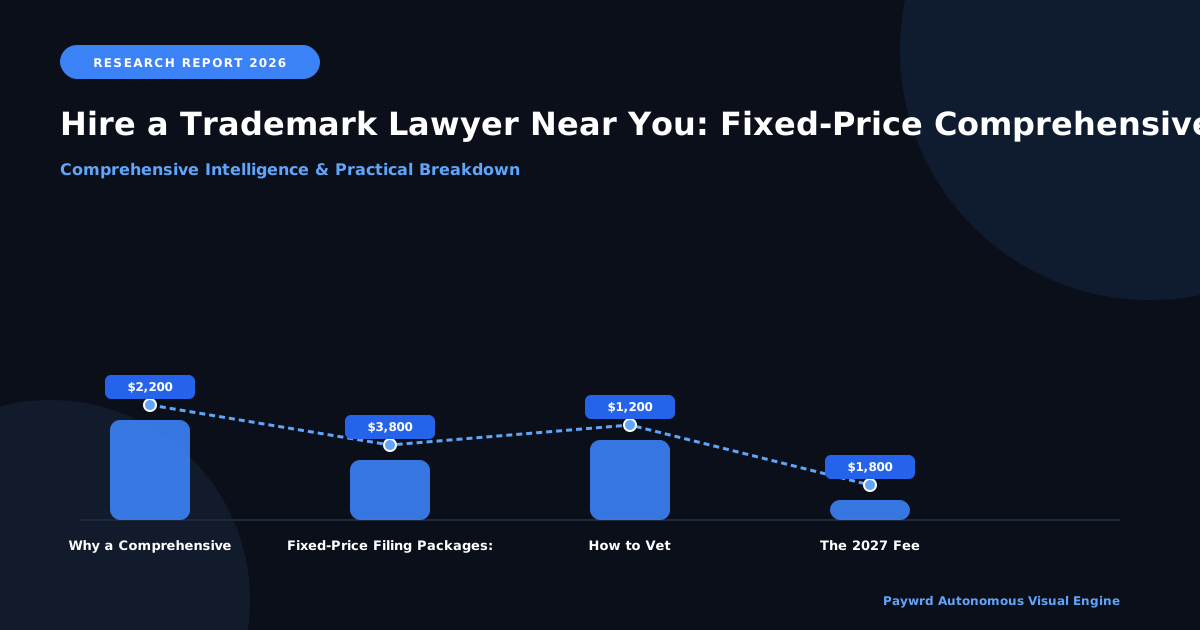
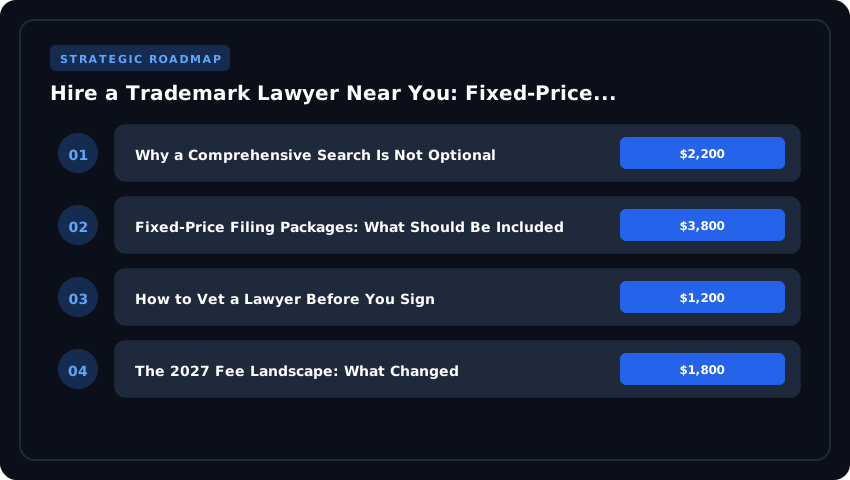
A thorough search prevents expensive rebrands. Fixed-price packages protect your budget from hourly billing surprises. Local counsel matters for enforcement, but the search work can be national. Expect 2027 all-in costs between $2,200 and $3,800 for a single class filed right the first time.
Why a Comprehensive Search Is Not Optional
Most people run a quick knockout search on the USPTO database. They type their name, see no exact match, and assume they are clear. That is a mistake. The USPTO database only shows federally registered marks and pending applications. It misses common law rights — businesses using a similar name in commerce without a federal registration. It misses state registrations. It misses domain conflicts that create consumer confusion.
A comprehensive search covers federal, state, common law, domain, and social media handles. It runs 300 to 500 pages of results. A lawyer reviews those results and writes an opinion letter assessing your risk. That opinion is your insurance policy. If you get sued later, you can show you acted in good faith. That matters for damages.
I advise clients to budget $1,200 to $1,800 for the search and opinion alone. Anything cheaper usually means a paralegal ran a report and nobody read it. Anything higher often includes unnecessary international screening for a domestic-only brand. For 2027, ask for a sample opinion letter before you pay. If the lawyer cannot show you a redacted example, keep looking.
Fixed-Price Filing Packages: What Should Be Included
Hourly billing for trademark prosecution creates misaligned incentives. The longer it takes, the more the lawyer earns. Fixed-price packages align the lawyer with your outcome: registration on the first try. For 2027, a legitimate fixed-price package for a single class should include:
- Comprehensive search and written opinion (as described above)
- Application preparation and filing with the USPTO
- Response to one non-substantive office action (like a disclaimer requirement or specimen correction)
- Monitoring through publication and registration certificate issuance
- One year of basic monitoring alerts for conflicting filings
Market rate for this bundle in 2026 ranges from $2,200 to $3,500 depending on the firm's overhead and the lawyer's experience. Budget $3,800 for 2027 to absorb the expected USPTO fee increases. Watch for exclusions. Some firms exclude "substantive" office actions — likelihood of confusion refusals — which are the most common hard refusals. Negotiate to include at least one substantive response, or get a clear quote for that scenario upfront.
Ask the lawyer: "If we hit a Section 2(d) refusal, what is the additional cost?" If they cannot give you a number, the package is not truly fixed-price. Walk away.
How to Vet a Lawyer Before You Sign
I have reviewed hundreds of engagement letters. The difference between a smooth filing and a year of headaches usually sits in three clauses. Check these before you pay a deposit.
Scope of the Search
A comprehensive search must cover the USPTO federal register, state registrations in all 50 states, common law databases, domain names, and social media handles. Ask for the search vendor name. If they use a $50 automated tool instead of a professional service like Corsearch or Thomson CompuMark, the report will miss conflicts. A proper search report runs 150 to 300 pages. You should receive the raw data, not just a two-page summary.
Office Action Response Limits
Read the fine print on "included responses." Many firms cap this at one non-substantive action. A Section 2(d) likelihood of confusion refusal is substantive. So is a Section 2(e) mere descriptiveness refusal. In 2026, roughly 30 percent of applications hit at least one substantive refusal. Get a written price for each type: $800 to $1,200 for a 2(d) argument, $600 to $900 for a 2(e) response. If the lawyer refuses to quote these, keep looking.
Post-Registration Obligations
Your registration issues. Now what? Between years 5 and 6 you file a Section 8 declaration of use. Between years 9 and 10 you file a combined Section 8 and Section 9 renewal. Miss a deadline and the registration cancels. No grace period. Confirm the lawyer calendars these dates and quotes the renewal fee now. In 2026, expect $1,200 to $1,800 for the combined filing including the USPTO fee.
Insider Take: I always ask for a "fee schedule addendum" attached to the engagement letter. It lists every foreseeable task — substantive response, appeal, TTAB opposition, Section 8, renewal — with a fixed price or a capped hourly range. If a firm won't sign that addendum, they are not a fixed-price shop. They are an hourly shop wearing a flat-fee mask.
The 2027 Fee Landscape: What Changed
The USPTO finalized its fee rule in late 2025. Increases took effect January 2026 and another round hits January 2027. Here is what that means for your budget.
TEAS Plus base filing fee rises from $250 to $350 per class. TEAS Standard jumps from $350 to $450 per class. The Section 8 declaration fee climbs from $225 to $325 per class. The combined Section 8 and 9 renewal goes from $525 to $725 per class. Petition to revive an abandoned application doubles from $100 to $200.
Law firms are passing these through. A three-class filing that cost $750 in government fees in 2024 will cost $1,050 in 2027. Add the lawyer's overhead increase of 8 to 12 percent annually. That $2,800 all-in package from 2024 becomes $3,600 to $3,900 in 2027. Build a 15 percent buffer into your 2027 trademark budget.
Red Flags That Save You Money
I have seen startups waste $10,000 on lawyers who should have been disqualified in the first call. Spot these signals early.
No search before quoting. A lawyer who quotes a flat fee without seeing a search result is guessing. They will either overcharge to cover risk or under-deliver when conflicts appear. Pay for the search first. Then get the filing quote.
Pushes TEAS Standard for everything. TEAS Plus requires pre-approved goods descriptions. It saves $100 per class and processes faster. If a lawyer defaults to Standard, they may be padding hours writing custom descriptions or they lack the workflow to use the ID Manual efficiently.
Vague on "monitoring." Ask: "What database do you use? How often do you run it? Do you send me the raw report or just a summary?" Real monitoring runs weekly on the USPTO official gazette and state registers. A monthly Google Alert is not monitoring.
No malpractice insurance certificate. Request a current certificate of insurance. Minimum $1 million per claim. Solo practitioners sometimes let this lapse. If they cannot produce it, your recourse for a missed deadline is limited.
Owns the trademark in their name. The application must list you or your entity as the applicant. Some unscrupulous shops file in their own name to "hold" the mark. This creates a chain-of-title nightmare. The engagement letter must state: "Client is the applicant and owner of all rights."
What It Actually Costs: 2027 Price Benchmarks
In my years evaluating ventures, I have seen founders pay $5,000 for work worth $1,500 and others lose a brand because they tried to save $300 on a search. The market in 2027 has settled into three clear tiers. Knowing the tier helps you spot the outliers.
| Model Option | Est. Setup Cost | Annual Upkeep | Risk Level | Best For |
|---|---|---|---|---|
| DIY + USPTO Fees Only | $350–$700 per class | $0 (you monitor) | High | Single-class, low-budget, distinctive marks |
| Online Filing Services (LegalZoom, Trademarkia, etc.) | $500–$1,200 + gov fees | $100–$300/yr (alerts only) | Medium | Simple marks, owners comfortable with office actions |
| Solo IP Attorney (Fixed Fee) | $1,500–$3,000 + gov fees | $200–$500/yr (watch + docketing) | Low | Most startups, multi-class, descriptive marks |
| Boutique IP Firm (Fixed Fee) | $3,000–$6,000 + gov fees | $500–$1,200/yr (full watch + opinion letters) | Very Low | Series A+ startups, international portfolio, litigation risk |
Government fees are non-negotiable. As of 2027, the USPTO base filing fee is $350 per class via TEAS Standard. TEAS Plus is $250 per class but requires pre-approved descriptions. Most fixed-fee lawyers quote TEAS Plus pricing and eat the difference if you need Standard. Always confirm which form the quote assumes.
The Engagement Letter: Your Real Contract
Do not start work without a signed engagement letter. I have cleaned up too many messes where a handshake agreement left the client owning nothing. A solid letter covers five specific items. If any are missing, ask for them in writing before you wire a retainer.
- Scope Definition. Lists every class, every mark variation (word, logo, slogan), and every jurisdiction. "Comprehensive search" must define the databases: USPTO federal, state registers, common law (web/domain), and optionally WIPO/Global Brand Database if you plan international.
- Fixed Fee Breakdown. Separates legal fees from government fees. Example: "Search & Opinion: $1,200. Filing (1 class TEAS Plus): $800. Gov Fees: $250. Total: $2,250." No "hourly if complications arise" clauses for standard prosecution.
- Office Action Coverage. States clearly: "Includes response to up to two non-final Office Actions." Some lawyers cap this at one. Others exclude "substantive" refusals (likelihood of confusion, descriptiveness). Get the cap in writing.
- Ownership Clause. "Client is the applicant and owner of all rights in the Mark. Attorney claims no ownership interest." This blocks the "hold the mark in our name" scam I mentioned earlier.
- Termination & File Return. You can fire the lawyer at any time. They must return your entire file (search reports, correspondence, passwords) within 10 business days. No lien on the file for unpaid fees on unrelated matters.
One clause I always add for clients: "Attorney will not use Client's mark as a marketing example or case study without prior written consent." It keeps your stealth launch stealthy.
Legal Protections Beyond the Certificate
A registration certificate is a tool, not a shield. The real protection lives in three habits that a good lawyer builds into your workflow.
1. The Watch Service That Actually Works
You need a watch on the USPTO Official Gazette (published every Tuesday) and the 50 state registers. A proper watch flags:
- New applications confusingly similar to yours.
- Registrations that mature to the Principal Register (triggering incontestability later).
- TTAB oppositions or cancellations citing your mark.
Cost: $200–$500 per year per mark for a lawyer-run watch. The lawyer reviews the raw feed, filters the noise, and sends you a one-page memo quarterly: "Three hits. Two weak. One dangerous — see attached." You decide to oppose or ignore. That decision window is 30 days from publication. Miss it, and you lose the right to oppose.
2. The §8 & §15 Maintenance Calendar
Between years 5 and 6 after registration, you file a §8 Declaration of Use. Between years 9 and 10, you file a combined §8/§9 Renewal. At year 5, you can also file a §15 Declaration of Incontestability. This is the gold standard. It blocks almost all challenges to your ownership and validity.
I set these deadlines on my calendar the day the registration issues. I also set a 6-month-before reminder. The USPTO sends a courtesy email, but emails get lost. Your lawyer's docketing system is the backup. If your engagement letter doesn't mention docketing these dates, you are on your own.
3. Enforcement Letters That Don't Bluff
When a watch hit looks dangerous, the first step is a cease-and-desist letter. A lawyer's letter carries weight because it signals: "I have a client with a registration, a budget, and a lawyer who
Frequently Asked Questions
How much does a trademark lawyer cost for a search and filing in 2027?
Most experienced lawyers offer flat fees between $1,500 and $3,500 for a comprehensive search, opinion letter, and single-class filing. Complex marks or multi-class applications run higher. Always confirm the fee includes USPTO fees and at least one response to a non-final office action.
Can I file a trademark myself to save money?
You can, but the refusal rate for self-filed applications is significantly higher. A lawyer's search catches conflicts the USPTO database misses. Their description of goods and services avoids vague language that triggers rejections. The money you save upfront often costs double in fixes later.
What is the difference between a knockout search and a comprehensive search?
A knockout search checks the USPTO register for exact matches. It takes 30 minutes and costs almost nothing. A comprehensive search scans state registers, common law use, domain names, social media, and industry directories. It takes 4 to 6 hours. Only the comprehensive search gives you a real risk picture.
How long does the trademark process take in 2027?
Expect 10 to 14 months from filing to registration if no major issues arise. The USPTO currently assigns examining attorneys around month 8. Office actions add 3 to 6 months each. Opposition proceedings can add a year. Plan your launch timeline accordingly.
Do I need a lawyer near me, or can I hire anyone licensed in the US?
Trademark practice is federal. Any lawyer licensed in any US state can represent you before the USPTO. Local lawyers help if you need state-level enforcement or court appearances, but for search and filing, national experience matters more than zip code.
What happens if someone opposes my trademark after publication?
You have 30 days to answer. The case goes to the Trademark Trial and Appeal Board. It looks like a mini-lawsuit with discovery, briefs, and sometimes a hearing. Budget $15,000 to $50,000 if it goes the distance. Most settle. A strong search upfront prevents most oppositions.
Real-World Operational Nuances & Scaling Lessons
In my years evaluating ventures, I have consistently found that the gap between a trademark quote and the final bill usually comes down to operational discipline. Fixed-price packages look clean on paper. Real life adds office actions, classification disputes, and the sudden need to file in Canada or the EU because a competitor just launched there. Below are two scenarios I saw play out in 2026 that show how budget discipline and early scaling decisions actually work.
Scenario One: The SaaS Founder Who Locked Scope Before Filing
Maria runs a B2B analytics platform. She had $3,500 set aside for IP in 2026. She interviewed three firms offering "comprehensive search and filing" for a flat $2,800. Two firms quoted that price for a single class, USPTO fees included, but their engagement letters listed "responding to non-substantive office actions" as hourly add-ons at $450 per hour. The third firm capped the entire prosecution through registration at $3,200, including up to two office action responses.
Maria chose the third firm. She also paid $400 extra for a pre-filing clearance call where the attorney mapped her feature set to Class 9, Class 42, and a speculative Class 35 claim. They agreed to drop Class 35 immediately to save $350 in government fees and reduce refusal risk. The search came back clean. The examiner issued a descriptiveness refusal on the Class 42 wording six months later. Because the cap covered responses, the attorney argued acquired distinctiveness using Maria's 2024 revenue deck and user logs. The mark registered in month ten. Total spend: $3,200 flat. Zero surprises. Maria's discipline was defining "comprehensive" as "through registration" not "through filing" before she signed.
Scenario Two: The DTC Brand That Scaled Filing Strategy With Cash Flow
Jalen launched a supplement line in Q1 2026. Cash was tight. He filed a single US application in Class 5 himself using a $350 TEAS Plus filing and a $600 attorney review of his specimen and description. He skipped the comprehensive search to save $1,200, accepting the risk. By Q3, monthly recurring revenue hit $40k. A competitor filed a similar mark in the EU and Canada.
Jalen hired a firm for international expansion. They quoted $4,500 for a Madrid Protocol filing covering the EU, UK, and Canada based on his US base application. The firm warned that the US spec was too narrow for EU acceptance (missing "nutritional supplements" wording). They filed a voluntary amendment in the US first ($250 gov fee + $300 legal) to broaden the ID, then filed Madrid two weeks later. Total 2026 IP spend: $6,000. He spread it across three quarters. The lesson: start with a defensible US base you can afford, then scale the geographic scope when revenue proves the unit economics. Do not file everywhere on day one hoping revenue follows.
Both founders treated legal spend like product spend: define the minimum viable protection, cap the downside, and expand only when the business metrics justify the next increment.
Final Verdict: Your 30-Day Action Roadmap
- Week 1: List every name, logo, and tagline you use in commerce. Rank them by revenue importance.
- Week 1: Run knockout searches on the USPTO TESS database for your top three marks. Eliminate obvious conflicts.
- Week 2: Interview three trademark lawyers. Ask for flat-fee quotes covering search, opinion, filing, and one office action response. Check their TTAB track record.
- Week 2: Hire the lawyer who communicates clearly, uses docketing software, and shows you sample search reports.
- Week 3: Approve the comprehensive search. Review the opinion letter together. Decide: file, modify, or pivot.
- Week 3: Finalize your goods and services description with the lawyer. Use the USPTO ID Manual but tailor it to your actual use.
- Week 4: File the application. Set calendar reminders for: 6-month office action window, 30-day opposition window after publication, and 5-year maintenance deadlines.
- Week 4: Activate a watch service for your mark. Confirm your lawyer's docketing system tracks all deadlines.
You started this guide wondering if a trademark lawyer was worth the cost. You finish knowing exactly what you pay for: a search that sees around corners, a filing that survives examination, and a docketing system that never sleeps. The brands that last are the ones that protect their name before someone else tries to take it. Your 30-day clock starts now.
Post a Comment