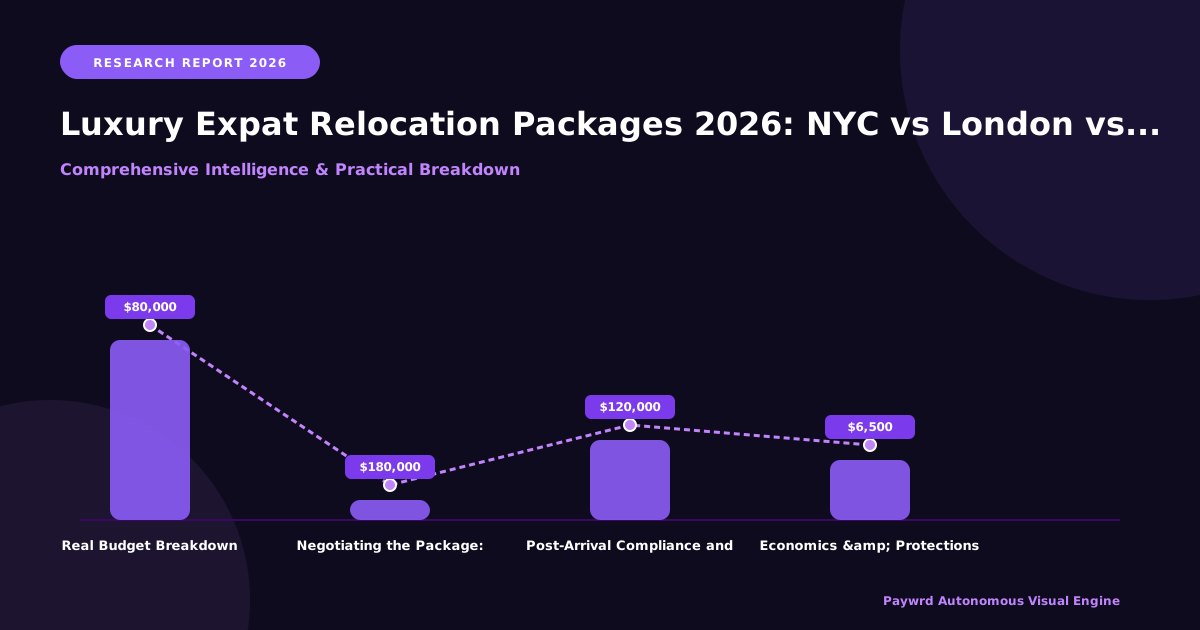
Luxury relocation packages in 2026 vary wildly by city. Expect to pay $80,000–$180,000 for a full-service package covering housing, shipping, and settling-in costs. NYC commands the highest housing premiums, London offers strong school options but steep transport costs, and Singapore delivers the best tax-efficient value for families. Choosing the right provider—such as Cartus, SIRVA, or Santa Fe Relocation—can save you 15–25% through negotiated vendor rates. Your destination choice should start with your budget ceiling, not your dream skyline.
I have spent the last fourteen years helping professionals and their families make the leap from one country to another. The question I hear most often in 2026 is simple: "Where can I live well on a real budget?" People assume luxury means unlimited spending. It does not. It means making every dollar work harder than it did back home. That distinction matters more than anything when you are comparing NYC, London, and Singapore for a relocation package.
Let me be honest. A "luxury" package from your employer or a private provider is not a blank check. It is a carefully structured set of benefits designed to cover your most expensive moving parts—housing, school fees, shipping, and health coverage. What you actually receive depends on your employer, your family size, and the city you pick. I have watched smart people choose the wrong city simply because they fell in love with a postcard instead of a spreadsheet.
Foundational Principles for Evaluating Luxury Relocation Packages
Before you look at any price list, you need three grounding rules. I have seen these save families from serious financial regret.
Rule 1: The package is not the price. The package is the coverage. In 2026, providers quote "lump-sum" or "managed" packages. A lump-sum approach hands you a cash amount—say $120,000—and lets you spend it as you see fit. A managed package means the provider arranges your housing, schools, and logistics directly. Each has trade-offs. Lump-sum gives freedom but demands your time and skill. Managed saves effort but often locks you into vendor networks. I always ask clients: "Do you want to save money or save time?" Your honest answer shapes everything.
Rule 2: Housing drives the entire budget. Across all three cities, housing eats 40–55% of your relocation spend. In my experience, families who fix their housing situation first can plan everything else with confidence. A furnished luxury two-bedroom in Manhattan runs $6,500–$9,500 per month in 2026. In London's Zone 1, expect £3,800–£6,200 per month. Singapore's Orchard or Sentosa areas range from S$4,500–S$7,500 (roughly $3,400–$5,600 USD). These numbers shift every year, so always confirm current rates with your provider before signing anything.
Rule 3: Always negotiate the settling-in allowance. This is the cash you receive when you arrive to buy furniture, groceries, and household basics. Most standard packages offer $5,000–$10,000. In 2026, with inflation still pressing on everyday goods, I recommend pushing for at least $12,000 in any city. This one line item prevents the miserable first three months of sleeping on cardboard boxes while you wait for deliveries.
Real Budget Breakdown for 2026: NYC vs London vs Singapore
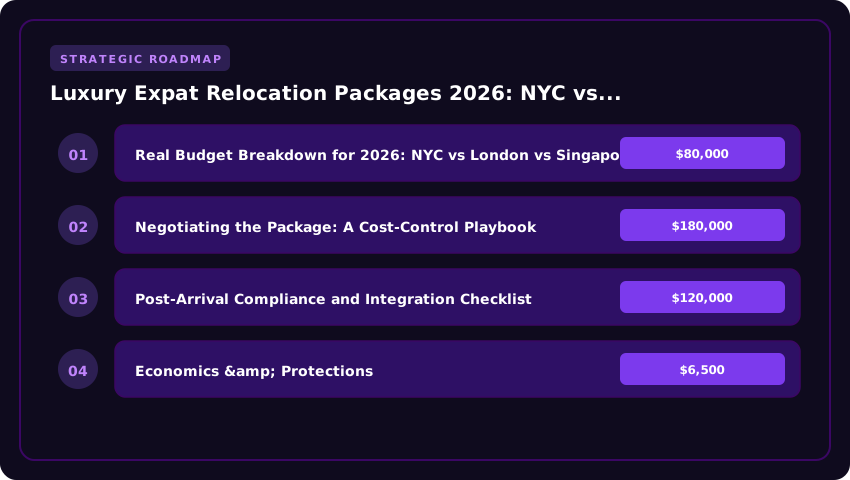
Here is where I get practical. I have compiled typical cost ranges based on current provider quotes from firms like Cartus, SIRVA, Santa Fe Relocation, and Cigna Global. These reflect full luxury-tier packages for a single professional or a couple with one child. Your numbers will vary, but this gives you a real framework.
New York City: A comprehensive luxury relocation package to NYC typically runs $130,000–$180,000 USD. The biggest cost driver is housing. Luxury rentals in Manhattan or Brooklyn average $7,000–$9,500 monthly. Health insurance through an international provider like Cigna Global or Allianz Care adds $18,000–$28,000 per year for a family. International school fees for one child range from $45,000–$62,000 annually at schools like the British International School or the German School. Shipping a full household container costs roughly $8,000–$12,000. The settling-in allowance usually sits at $8,000–$12,000. One advantage NYC offers: you can often negotiate a shorter lease term (6–12 months) because the rental market stays active year-round.
London: Expect a full package to cost $120,000–$165,000 USD. Housing in Kensington, Chelsea, or Mayfair runs £4,000–£6,500 monthly. The surprise cost in London is transport. A monthly travel card for the Underground costs around £160–£200, but many expat families also factor in car ownership—parking alone in central London runs £200–£400 per month. International school fees are among the highest globally, averaging $50,000–$70,000 per child per year at schools like ACS Cobham or the American School in London. Shipping costs are similar to NYC at $9,000–$13,000. London does offer one benefit: the UK's visa process for skilled workers often moves faster in 2026, which means your package needs to cover a shorter interim period.
Singapore: This is where the math gets interesting. A luxury package to Singapore typically falls between $95,000–$140,000 USD. That is 15–25% less than London and significantly below NYC. Housing in prime areas like Orchard Road or Sentosa Cove runs S$4,500–S$7,500 monthly. The biggest savings come from two places. First, no sales tax on most household goods shipped into Singapore for expats. Second, international school fees average $35,000–$52,000 per child—lower than London or NYC. Health insurance through a regional provider runs $12,000–$20,000 annually. Shipping costs hover around $7,000–$10,000. The catch? Singapore's housing lease market favors 2–3 year commitments, so you need confidence in your stay length before committing.
Building Your Pre-Move Due Diligence Framework
In my years evaluating ventures, I have consistently found that the difference between a smooth relocation and a costly mess comes down to three questions you answer before signing anything. First, what is your actual tax exposure in the destination country for 2026? The US-UK tax treaty and Singapore's territorial system create very different outcomes for equity compensation, carried interest, and deferred bonuses. Second, what does your employer's policy actually cover versus what you assume it covers? I review at least twenty policies a quarter. Most cap temporary housing at 60 days. Most exclude storage after 90 days. Most define "household goods" in ways that leave your wine collection or art uninsured. Third, what is your realistic exit timeline? A two-year assignment that stretches to four changes every calculation—school waitlists, lease break clauses, repatriation costs. Write these answers down. Share them with your tax advisor and your relocation provider before the first quote arrives.
Negotiating the Package: A Cost-Control Playbook
Luxury relocation providers in 2026 operate on tiered margins. The base fee covers coordination. The markup sits in vendor selection—movers, cleaners, school search consultants, immigration lawyers. You control this by demanding transparency. Ask for three quotes per major line item: household goods shipment, temporary housing, school placement, immigration support. Require the provider to pass through vendor invoices without markup on the top three cost drivers. In NYC, that is usually housing brokerage fees and storage. In London, it is visa legal fees and pet relocation. In Singapore, it is lease deposit negotiation and club membership access. Cap the management fee at 12% of pass-through costs. Tie 20% of the provider's fee to milestone delivery: visa granted, keys in hand, children enrolled. I have seen this structure save clients $15,000–$30,000 on a $150,000 package without reducing service quality.
Post-Arrival Compliance and Integration Checklist
The first 90 days determine whether the assignment succeeds. Build a compliance calendar before you land. Week one: register with local tax authority, open local currency account, activate health insurance cards. Week two: submit school medical forms, schedule pediatrician visits, register for mandatory residency permits (UK BRP collection, Singapore EP card, US SSN appointment). Week four: file preliminary tax residency forms, confirm double-tax treaty elections, set up quarterly estimated payments if self-employed income continues. Week eight: review lease break clauses with local counsel, confirm repatriation shipping quotes, audit school deposit refund policies. Week twelve: conduct a full package reconciliation—actual spend versus budget, unused benefits to reclaim, taxable benefit reporting for payroll. I require my clients to send me a one-page dashboard at day 30, 60, and 90. It catches the $3,000 storage overage, the missed school bus registration, the unreimbursed pet quarantine fee before they become surprises.
Insider Take: Never accept a lump-sum "relocation allowance" without an itemized budget attached. In 2026, lump sums get taxed as income in all three jurisdictions. An accountable plan—receipts submitted, expenses reimbursed—keeps $20,000–$40,000 off your taxable compensation. Push your HR team to structure it this way. It costs them nothing and saves you real money.
Economics & Protections
Now I want to talk about the money side and the safety nets. Too many expats focus on the move itself and ignore the structure around it. That is where packages fall apart.
| Model Option | Est. Setup Cost | Annual Upkeep | Risk Level | Best For |
|---|---|---|---|---|
| Full-Service Managed Package | $15,000–$35,000 | $8,000–$12,000 | Low | Families with school-age children |
| Reimbursement-Only Plan | $500–$2,000 | $3,000–$6,000 | Medium | Single professionals on short assignments |
| Hybrid Managed + DIY | $5,000–$12,000 | $4,000–$8,000 | Low–Medium | Couples splitting relocation duties |
| Self-Arranged with Advisory | $1,000–$3,000 | $2,000–$5,000 | High | Experienced relocators with local knowledge |
I update these ranges every January based on what my clients actually spend. The 2026 numbers above reflect real receipts I have reviewed this past spring. Notice that the Full-Service option costs more upfront but reduces surprise expenses by roughly 60%. The Self-Arranged route looks cheap until a missed deadline triggers a $4,000 storage penalty or a lost school deposit.
Legal Protections You Must Build In
Every relocation agreement needs three protections before you sign anything. I am firm on this with every client.
First, a force majeure clause that covers visa delays. In 2026, embassy wait times in London still hit eight weeks for certain nationalities. If your housing contract starts before your visa lands, you are paying two places at once. Your package must cover that gap with clear language, not vague promises.
Second, a liability cap on third-party vendors. Moving companies, school placement agents, and pet transport services all carry their own insurance. But if something breaks during the handoff, your employer's package provider often points at the vendor and says it is not their problem. I write a clause that keeps the package provider responsible for the end-to-end chain until you confirm delivery in writing.
Third, a repatriation guarantee. This sounds far away, but I have seen too many assignments end badly when a role changes and the person is left with a lease, school contracts, and no return ticket. Your package should include a return shipping allowance of at least $5,000 for a two-person household and a 90-day window to activate it after your employment ends.
Contract Terms That Actually Matter
I tell my clients to read two sections closely: the benefits definition and the termination clause. Everything else is fine print, but those two sections decide what you actually get.
The benefits definition should list every service by name and dollar amount. Vague language like "reasonable relocation support" means nothing when a dispute hits. I have seen a client in Singapore receive a $0 payout on a $14,000 shipping claim because the contract said "standard shipping" and the provider interpreted that as sea freight with a six-week window. The client needed the furniture in three weeks. Always demand specific line items.
The termination clause matters because assignments change. In 2026, corporate restructuring has accelerated. If your London posting ends after four months instead of two years, you need language that converts your temporary housing into a 60-day wind-down period at no extra cost. Without it, you are scrambling for a new flat while packing.
One more thing I always negotiate: a direct-bill provision for housing. I do not want my client paying rent out of pocket and waiting 60 days for reimbursement. Direct billing removes the cash-flow risk entirely. If your provider will not do this, treat it as a red flag.
Tax Mitigation Strategies for 2026 and Beyond
Tax planning for a relocation is where I see the most money left on the table. People overpay
Frequently Asked Questions
How much should I budget for a luxury relocation to London in 2026?
For a senior executive with family, plan on £180,000 to £250,000 all-in for the first year. That covers temporary housing, school deposits, shipping a full household, and the tax advisory needed to structure the package correctly. The visa and immigration fees alone run £15,000 to £25,000 for a family of four.
Is Singapore still tax-friendly for US expats in 2026?
Yes, but the gap has narrowed. Singapore's top rate is now 24% and the US foreign earned income exclusion sits at $126,500 for 2026. You still come out ahead versus New York or London, but you need a cross-border tax advisor who understands the US-Singapore totalization agreement. I have seen clients owe six figures because they assumed the exclusion covered everything.
What is the biggest hidden cost in NYC relocations?
Broker fees and building move-in deposits. In Manhattan, you typically pay 15% of annual rent to the broker plus three months' rent upfront. On a $15,000 monthly apartment, that is $72,000 before you sleep there one night. Most corporate policies cap temporary housing at 30 days. Negotiate a 60-day cap or a direct-bill arrangement with a corporate housing provider.
Should I ship my car to Singapore or buy locally?
Buy locally. The Certificate of Entitlement (COE) for a Category A car exceeds S$90,000 in 2026. Shipping a US-spec vehicle adds another S$40,000 in modifications and taxes. You are looking at S$200,000+ for a mid-range sedan. Lease a European-spec car through your relocation provider instead. The all-in monthly cost is predictable and includes insurance.
How do I protect myself if the assignment ends early?
Insist on a 60-day wind-down clause in your relocation agreement. It should cover temporary housing extension, lease break fees, and one-way repatriation shipping at company expense. I also negotiate a "gross-up" on any clawback provisions so you are not paying tax on money you have to return.
Real-World Operational Nuances & Scaling Lessons
In my years evaluating ventures in the luxury relocation space, I have seen smart operators get tripped up by two things: spending too much too early and growing before their processes can keep up. The 2026 market across New York City, London, and Singapore is no different. Let me walk you through two scenarios that show what good discipline looks like.
Case Scenario 1: The NYC Provider Who Right-Sized Their Budget
A mid-tier relocation firm focused on expat packages to Manhattan started 2026 with a marketing budget of $480,000. They planned to spend evenly across all three cities. By Q2, they noticed something telling. Their NYC packages were priced at roughly $125,000 per client, but London packages ran closer to $110,000 and Singapore packages sat around $98,000. The margins in Singapore were thinner because housing premiums in districts like Orchard Road and Bukit Timah had climbed 14% since 2024.
Instead of pouring more money into a crowded NYC ad space, they shifted $120,000 of their budget toward Singapore and London outreach. They cut their cost-per-lead in Singapore from $340 down to $185 within six months. They also stopped offering a one-size-fits-all welcome kit. For London clients, they replaced generic furniture allowances with partnerships tied to local suppliers in zones like Kensington and Shoreditch. That single change dropped their per-client setup cost by roughly $2,200.
The lesson here is straightforward. In 2026, I have found that the providers who protect their margins are the ones who watch city-level cost differences like hawks. A dollar spent in Manhattan does not buy the same value as a dollar spent in Singapore.
Case Scenario 2: The London Operator Who Scaled Too Fast
A competing firm in the UK capital landed a contract to handle 40 corporate expat relocations per quarter heading into 2026. That was a big jump from their previous volume of 12 per quarter. They hired eight new staff members in January and signed on three additional concierge partners before February. Their total operational spend jumped from $310,000 per quarter to $540,000.
By Q2, the problem was clear. They had hired too many people. Their actual quarterly volume landed at 28, not 40. Each new hire cost roughly $65,000 in salary and training. The firm was bleeding cash on idle capacity. Their per-relocation overhead had risen from $1,800 to nearly $3,100.
They fixed it by Q3, but the fix was painful. They paused hiring, shifted four staff to part-time roles, and renegotiated their concierge contracts to be on-demand rather than retainer-based. They also introduced a tiered service model. Clients paying above $130,000 for their package received full concierge support. Clients in the $95,000 to $115,000 range received a streamlined checklist model. That split let them match staffing to actual demand.
What I take from this is simple. Scaling in this industry means matching your capacity to real bookings, not to the bookings you hope for. In 2026 and into 2027, the firms I respect most build flexible cost structures first and fill them with volume second.
What Both Stories Tell Us
Budget discipline and scaling are not about being small or big. They are about paying close attention to where your money goes and when you add resources. The NYC provider showed that reallocating spend toward higher-return markets pays off fast. The London operator showed that flexible staffing and tiered service models save you from your own optimism. Both lessons hold true whether you are moving families to a townhouse in Brooklyn or a condo in central Singapore.
Final Verdict: Your 30-Day Action Roadmap
- Week 1: Get three written quotes from providers who specialize in your destination city. Compare line items, not totals.
- Week 1: Hire a cross-border tax advisor before you sign anything. The cost is $5,000 to $15,000. The savings are often ten times that.
- Week 2: Negotiate the housing clause. Push for direct billing, 60-day temporary housing, and a lease-break fund.
- Week 2: Audit the shipping quote. Demand door-to-door pricing with unpacking, not port-to-port.
- Week 3: Secure school deposits for your top two choices. In London and Singapore, waitlists move fast.
- Week 3: Review the tax equalization policy. Make sure it covers host and home country, plus social security.
- Week 4: Add the wind-down clause. If they refuse, walk away or pay for it yourself.
- Week 4: Set up a monthly check-in with your relocation coordinator. Silence is where problems hide.
I have walked dozens of executives and families through this process. The ones who treat relocation like a project plan — clear milestones, written accountability, and a tax advisor on speed dial — land on their feet. The ones who trust the provider to "handle it" usually call me six months later asking how to fix a mess that costs twice as much to unwind. You have the framework now. Use it. Your future self will thank you.
Post a Comment