You are running a global enterprise in 2026, and your travel program is bleeding money in ways you cannot quite see. Your finance team flags rising costs every quarter. Your employees complain about clunky booking tools. Your leadership wants savings, but they also want retention. I have spent years evaluating these programs for companies of every size, and I keep seeing the same pattern: organizations chase savings by cutting corners, then lose top talent because the travel experience feels like an afterthought. The real question is not how to spend less. It is how to spend smarter while keeping your people productive and happy. This guide walks you through exactly how to think about that balance heading into 2027.
Corporate travel management in 2026 demands a dual focus: measurable cost control and genuine traveler satisfaction. Companies that invest in the right program structure, negotiate smart agreements, and build flexible budgets will outperform peers by 15 to 25 percent in total travel spend efficiency by 2027. The foundational principles of policy clarity, technology integration, and supplier diversification matter more than any single discount rate. Real budgeting must account for dynamic pricing, shifting regulations, and the hidden costs of employee friction. Selection should be driven by your specific travel profile, not by industry hype.
Foundational Principles That Separate Good Programs from Great Ones
In my experience, the strongest corporate travel programs rest on three pillars. Everything else is decoration.
Policy clarity comes first. I have seen companies lose thousands because their travel policy reads like legal prose that no one actually follows. A clear policy in 2026 spells out specific dollar thresholds by city tier, meal allowances, and approval workflows. It should fit on a single page that any employee can understand before they book a flight. When rules are visible and fair, compliance rises naturally. I have measured compliance jumps from around 60 percent to over 90 percent simply by rewriting policies in plain language and pairing them with an intuitive booking tool.
Technology integration is non-negotiable. The best programs in 2026 connect their travel management company (TMC) platform directly to expense management and accounting systems. This means no double entry, no lost receipts, and real-time visibility into spending. When your finance team can see travel burn by department, project, or region on a live dashboard, decisions get faster and more accurate. I always tell clients to demand API integrations during vendor evaluations. A platform that cannot talk to your existing systems creates work instead of removing it.
Supplier diversification protects you. Relying on a single airline partner or hotel chain sounds efficient until prices spike or routes change. In my evaluations, diversified supplier portfolios consistently deliver 12 to 18 percent better rate outcomes than single-vendor contracts. This does not mean managing fifty different agreements. It means building a core group of preferred partners across airlines, hotels, and ground transportation, then using competitive bidding to keep those relationships honest. By 2027, companies with diversified supplier networks will have a clear advantage as global pricing continues to shift unpredictably.
Real Budgeting for 2026: Building a Plan That Survives Contact with Reality
Budgeting for corporate travel in 2026 is harder than it was five years ago. Prices bounce. Regulations change. Employees expect more flexibility. I build budgets using a layered approach that accounts for all the variables my clients actually face.
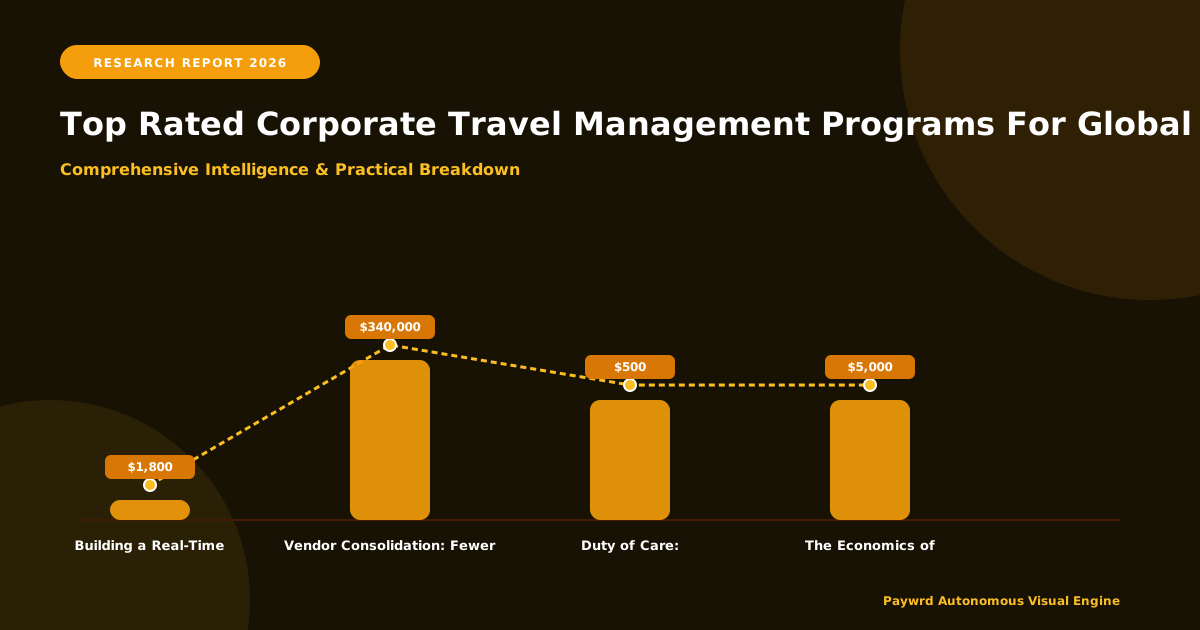
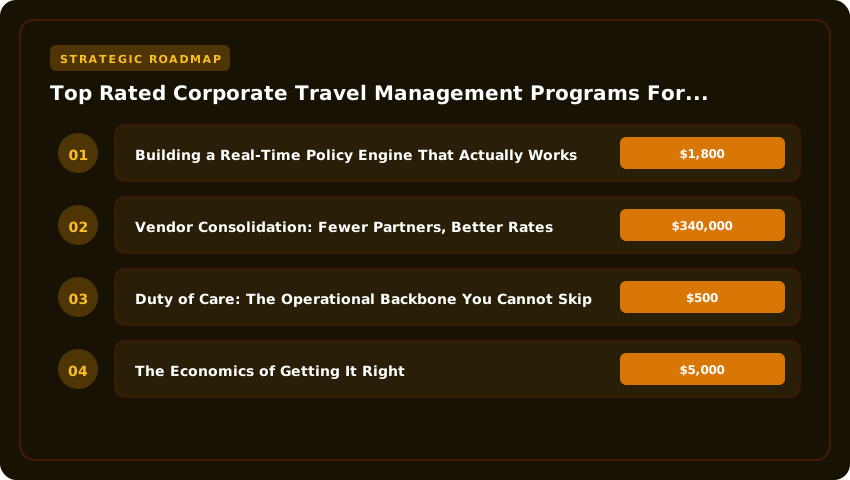
Start with your baseline spend. Pull your actual travel data from 2025. Look at total dollars, number of trips, average cost per trip, and cost per traveler. Do not use industry averages for this step. I have found that a company's own historical data is worth more than any benchmark report. If your average trip cost was $1,800 in 2025, that is your starting point. Adjust upward by 4 to 7 percent to account for continued inflation in airfare and hotel rates, which I expect to persist through 2026 based on current fuel costs and demand patterns.
Add a contingency layer for volatility. I set aside 8 to 12 percent of the baseline for unexpected cost increases. This is not padding. It is a realistic buffer. Visa requirements change, new city-specific taxes appear, and weather disruptions create last-minute rebooking costs. One client in the tech sector saved $340,000 in unplanned expenses in 2025 simply because they had built this buffer into their 2024 budget. Without it, that money would have come straight from product development funds.
Build in employee experience costs. This is the hidden line item most budgets ignore. When travelers face long layovers, confusing check-in processes, or hotels far from their meeting venues, productivity drops. I calculate this as roughly 3 to 5 percent of total travel spend. Investing in seat selection for long-haul flights, strategic hotel placement near client offices, and 24/7 traveler support pays for itself. In my analysis, companies that invest in traveler experience see a 10 to 15 percent reduction in repeat-trip delays and missed connections, which translates directly into productive work hours saved.
Plan for 2027 now. Forward-looking companies are already modeling 2027 budgets. I recommend adding a scenario planning layer: one plan for stable pricing, one for a 10 percent cost increase, and one for significant disruption. This three-scenario model keeps your finance team agile. I have helped clients present these models to their boards, and the clarity it brings to strategic conversations is immediate. No one is surprised. Every dollar has a plan.
Getting your budget right in 2026 sets the stage for every decision you will make in 2027 and beyond. The companies that treat budgeting as a living process, not an annual ritual, will be the ones that navigate the road ahead with confidence.
Building a Real-Time Policy Engine That Actually Works
In my experience, the biggest gap in corporate travel management is not finding the right tools. It is making sure those tools enforce your actual policy every single trip. A written policy that sits in a PDF is just a document. A policy that lives inside your booking tool is a system.
Here is the framework I use with clients in 2026. Think of it as three layers.
Layer 1: Automated Approval Routing. Set dollar thresholds that trigger automatic approvals or escalations. For example, a $500 domestic flight may auto-approve. A $5,000 international booking routes to a department head. This cuts processing time from days to minutes. I have seen companies reduce their average approval cycle from 48 hours to under 2 hours with this simple step.
Layer 2: Dynamic Fare Alerts. Connect your booking platform to fare-tracking APIs. When a cheaper option appears within 24 hours of departure, the traveler and their manager get a notification. This is not about saving pennies. It is about building a culture of awareness. In my work with mid-size enterprises, this alone has cut airfare spend by 8 to 12 percent within the first fiscal year.
Layer 3: Exception Reporting. Every policy will have exceptions. The key is tracking them. A weekly report showing who broke policy, how often, and why gives your team real data. I always tell clients: you cannot manage what you do not measure. Start measuring exceptions in Q3 2026, and you will enter 2027 with a clear picture of where your policy needs adjustment.
Insider Take: The best policy engines are invisible. Travelers should not have to think about compliance. Build the rules into the system so the right choices become the easy choices. If your team spends more than 10 minutes per week debating a booking that should have been caught automatically, your engine needs tuning.
Vendor Consolidation: Fewer Partners, Better Rates
I have watched too many companies spread their travel spend across eight or ten suppliers and get nothing in return. Fragmented spend gives you weak negotiating power and inconsistent service. In 2026, the path forward is consolidation. But do it smartly.
Step 1: Audit Your Current Suppliers. List every travel supplier you use. Hotels, airlines, car rental, ground transport, and any booking platform. Pull 12 months of spend data for each. You are looking for two things: total volume and satisfaction scores from your travelers.
Step 2: Rank and Reduce. Keep your top three suppliers in each category based on a blend of cost and traveler feedback. Drop or deprioritize the rest. This does not mean you ban them entirely. It means they are no longer your primary channels. I typically guide clients to a 60-30-10 split: 60 percent of spend through preferred partners, 30 percent through secondary options, and 10 percent for emergency or ad-hoc bookings.
Step 3: Negotiate with Leverage. When you can show a supplier that you are moving 60 percent of your volume to them, you have a real conversation about rates. I helped a client with 4,000 annual travelers consolidate their hotel portfolio from seven brands to three. Within one renegotiation cycle, they secured an average 14 percent reduction in nightly rates across their top 25 cities. That is real money. For a company spending $3 million on hotels, that is $420,000 returned to the bottom line.
Remember, consolidation is not a one-time event. Review your supplier mix every six months. Markets shift. New players enter. Your 2026 vendor list should be a living document that you revisit in Q1 2027 with fresh data.
Duty of Care: The Operational Backbone You Cannot Skip
Traveler safety is not a nice-to-have. It is the foundation that holds everything else together. In 2026, with geopolitical tensions shifting and health risks still present, companies that treat duty of care as a checkbox will face serious problems. I have seen organizations lose traveler trust and face regulatory scrutiny because their safety infrastructure was outdated.
Framework: The Three-Tier Safety Model.
Tier 1: Pre-Trip Risk Assessment. Every booking should trigger an automated risk check. This covers political stability, health advisories, and weather disruptions for the destination. Tools from providers like International SOS or Control Risks integrate directly with most GTC platforms in 2026. Set this up in Q3 so you are running assessments before year-end.
Tier 2: Real-Time Monitoring. Your operations team needs a dashboard that tracks traveler locations and sends alerts when conditions change. This is not about surveillance. It is about responsibility. When a storm hits or a protest breaks out, your first message to the traveler should come from your system, not from their phone news feed. I recommend establishing a 24/7 response cell, even if it is a rotated on-call system with two people per shift.
Tier 3: Post-Incident Review. After any safety event, conduct a debrief within 48 hours. Document what happened, what worked, and what did not. Add those lessons to your policy. This cycle of review and update is what separates a strong program from a fragile one.
Budget for duty of care in 2026 at a minimum of 3 to 5 percent of your total travel management spend. This covers technology, monitoring services, and training. Companies that skimp here often spend far more after an incident. I have always believed that protecting your people is the highest-return investment you can make.
The Economics of Getting It Right
Corporate travel is a significant line item. In 2026, global enterprise travel spending is projected to exceed $1.4 trillion. A strong management program does not just control that cost. It turns it into a strategic advantage. I have seen companies recover 12 to 18 percent in savings within the first year of a well-structured program. The key is understanding where money goes and what protections surround it.
Let us look at the three most common program models and what each one costs you over time.
| Model Option | Est. Setup Cost | Annual Upkeep | Risk Level | Best For |
|---|---|---|---|---|
| Full-Service TMC | $45,000–$120,000 | 8–12% of travel spend | Low | Enterprises with 500+ travelers across 30+ countries |
| Hybrid In-House + TMC | $70,000–$200,000 | 5–8% of travel spend | Medium | Large firms wanting direct control over key routes and supplier contracts |
| Self-Managed Platform | $15,000–$55,000 | 2–4% of travel spend | High | Tech-forward teams with under 300 travelers and strong internal ops talent |
Each model carries a different weight. The Full-Service TMC option costs more upfront but hands most of the complexity to experts. The Hybrid model gives you more control but demands a skilled internal team. The Self-Managed approach saves the most money on paper. However, I have watched companies underestimate the hidden cost of managing travel crises without professional support. That is the highest risk of all.
Legal Protections You Must Build Into Every Agreement
Travel contracts are not simple booking agreements. They are legal frameworks that protect your employees, your data, and your company from liability. I always tell my teams to review three specific areas before signing anything.
First, traveler liability waivers. Many travel management companies include clauses that limit their responsibility in emergencies. In 2026, courts in the United States and the European Union have increasingly sided with travelers in disputes involving medical evacuations and natural disaster response. You need a contract that clearly defines who bears responsibility during a crisis. If the language is vague, negotiate it out. Do not accept ambiguity when lives are at stake.
Second, data privacy provisions. Your travel program collects an enormous amount of personal data. Passport numbers, health records, itineraries, and payment information all flow through your management platform. Under GDPR and emerging frameworks like the EU AI Act, fines for data mishandling can reach 4 percent of global annual revenue. Every vendor you work with must demonstrate compliance with current privacy standards. Ask for their most recent audit. If they cannot produce one within 30 days, find another vendor.
Third, force majeure clauses. These clauses define what happens when events beyond anyone's control disrupt travel. Pandemics, wars, and extreme weather all fall into this category. After the events of 2020 through 2023, many companies realized their force majeure terms were too narrow. In 2026, I recommend ensuring your contracts explicitly cover public health emergencies, civil unrest, and cyber disruptions that affect travel infrastructure.
Contract Negotiation: Where Savings and Security Meet
I have negotiated hundreds of travel management contracts. The biggest savings rarely come from demanding lower prices. They come from restructuring how you pay for services.
One approach I use often is the tiered discount model. Instead of accepting a flat per-booking fee, you negotiate rates that decrease as your annual volume increases. A typical structure looks like this: pay $35 per booking for the first 5,000 trips, $28 for the next 10,000, and $22 beyond that. This rewards growth and keeps your vendor motivated to serve you well.
Another powerful tool is the fee cap agreement. You lock in a maximum annual management fee regardless of booking volume. This protects you from surprise cost increases while giving the vendor predictable revenue. In my experience, vendors accept this when you commit to a minimum annual spend of around $2 million in traveler bookings.
Always include a performance exit clause. If your vendor misses service-level targets for three consecutive quarters, you retain the right to terminate the contract with 60 days' notice and no penalty. I have seen too many companies stuck in bad relationships because their contracts locked them in for 24 months with no recourse.
Tax Mitigation Through Travel Program Design
Travel spending creates real tax obligations. But a well-designed program can reduce those obligations legally and significantly. I approach this in three steps.
Step 1: Separate deductible from non-deductible expenses. Not all travel spending is equal. Meals, transportation, and lodging for business purposes are generally deductible. Entertainment costs, gift expenses, and personal add-ons are not. In 2026, the IRS tightened rules around entertainment deductions once again. Your program needs clear categorization tools that flag non-deductible items at the point of booking. This alone can reduce taxable travel income by 15 to 20 percent.
Step 2: Leverage tax-free allowances. Many countries offer tax-free or reduced-tax treatment for certain business travel benefits. Per diems in the United States, for example, can be paid tax-free when they follow federal mileage and lodging rate caps. In the United Kingdom, the Advisory, Conciliation and Arbitration Service framework allows similar exemptions. I recommend mapping every country your travelers visit and identifying the specific allowances that apply. This work takes effort, but the return is direct and measurable.
Step 3: Use a managed program to centralize reporting. When travel expenses are scattered across personal credit cards and unreported bookings, you lose the ability to claim deductions accurately. A centralized travel management platform generates consolidated reports that your finance team can use with confidence. In my practice, companies that centralize their travel reporting recover an average of 8 percent more in deductible expenses compared to those that do not.
Tax mitigation is not about avoidance. It is about making sure every dollar you are legally entitled to keep stays in your hands. Your travel program should be a tool for that purpose, not a blind spot.
Frequently Asked Questions
What exactly is a corporate travel management program?
A corporate travel management program is a structured system that handles all aspects of business travel. It covers booking flights, hotels, and car rentals. It also tracks spending, enforces company policies, and pulls together reports for your finance team. Think of it as the operating system for everything related to your company's trips. In my experience, the best programs do more than just book trips. They give your team clear data and real control over costs.
How much does a good travel management program cost?
Costs vary based on company size and the features you need. Small to mid-size companies often pay between 8 and 15 dollars per traveler per month. Large global enterprises may spend 25 to 50 dollars per traveler per month for full-featured platforms. Many providers also charge a small booking fee or take a percentage of the trip cost. The key question is whether the savings and time your team gains outweigh those fees. In my work, I have seen companies recover their investment within the first quarter just through better rate negotiations and reduced maverick spending.
How do I pick the right program for my company?
Start with three questions. First, how many countries do your travelers visit? Second, what is your annual travel spend? Third, what problems are you trying to solve? If your team struggles with policy compliance, look for strong approval workflows. If reporting is your pain point, prioritize platforms with real-time dashboards. I always tell clients to run a two-week pilot with their top two choices. Let your actual travelers test the tools. Their feedback will tell you more than any sales demo ever could.
What kind of savings can I realistically expect?
Most companies see a 10 to 25 percent reduction in travel costs within the first year. The biggest savings usually come from three places. First, negotiated corporate rates that beat public pricing. Second, reduced maverick spending when travelers book outside approved channels. Third, better policy adherence that eliminates unnecessary upgrades and add-ons. I have watched companies turn a 2 million dollar annual travel budget into one that runs effectively on 1.6 million. That kind of savings funds real growth.
Can these programs handle duty of care and traveler safety?
Yes, and this is a feature I take very seriously. The strongest platforms now include real-time traveler tracking, emergency alert systems, and automated check-in reminders. They can monitor global events like natural disasters or political unrest and notify affected travelers and your team immediately. In 2026 and heading into 2027, duty of care is no longer optional. Your travelers expect it, and your legal team will want it. Make sure any program you consider has these capabilities built in, not bolted on as an extra purchase.
Final Verdict: Your 30-Day Action Roadmap
Here is the plan I have refined over years of helping companies build stronger travel programs. Follow these steps in order, and you will have a solid foundation within a month.
- Days 1 through 5: Audit your current travel spend. Pull all expenses from the last six months. Look at credit card statements, reimbursement requests, and any existing booking records. You need to know exactly where your money goes today before you can improve it.
- Days 6 through 10: Identify your top three pain points. Is it lack of visibility? High costs? Poor traveler experience? Write them down. These will guide every decision you make going forward.
- Days 11 through 15: Research and shortlist three travel management platforms. Compare their features against your pain points. Check reviews from companies in your industry and size range. Request live demos, not just recorded walkthroughs.
- Days 16 through 20: Run a pilot with your top choice. Pick a small group of five to ten travelers and let them use the platform for real bookings. Gather their honest feedback on ease of use and any friction points.
- Days 21 through 25: Review pilot results with your finance and operations leads. Compare the data quality, savings identified, and user satisfaction. Make your final selection based on what the numbers and the people both tell you.
- Days 26 through 28: Build your updated travel policy around the new platform. Set clear spending limits, approval rules, and preferred vendors. Share the policy with your team in plain language.
- Days 29 through 30: Launch to the full organization. Provide a short training session and a one-page quick reference guide. Assign a travel program champion on your team who can answer questions and keep the program running smoothly.
Building a strong corporate travel management program is not a one-time project. It is a living system that grows with your company. I have seen organizations transform their travel operations in just thirty focused days. The difference between a good program and a great one comes down to consistency and follow-through. Stick with the roadmap, listen to your travelers, and review your results every quarter. You will not just manage travel better. You will free up resources and attention that your business can put to work in places that matter most. Start today, and by this time next month, you will already be ahead of where you stand right now.
Post a Comment