Decentralized trials need software that puts patients first, not just sites. In my experience, the right platform cuts enrollment time by 30 to 50 percent when matched to your trial design. Budget realistically: expect $15,000 to $85,000 annually for mid-size trials in 2026, with prices shifting again as we move into 2027. The tools that win are the ones your site staff will actually use every day.
You are probably staring at a spreadsheet of software options right now. Maybe your team is running a decentralized trial and your current setup feels like duct tape and guesswork. I have been through this exact moment more times than I can count. The problem is never the technology itself. The problem is knowing what your trial actually needs before you sign anything.
Foundational Principles for Choosing the Right Platform
Before I ever look at pricing, I ask one question: Who is this software serving? In a decentralized trial, the answer is three groups: the patient, the site coordinator, and the sponsor's monitoring team. If a platform serves one group well but frustrates the other two, it will fail. Period.
Here is what I look for every single time:
- Patient-facing simplicity. A participant should be able to consent, complete a visit, and report symptoms from a smartphone in under five minutes. If the app feels like a desktop program squeezed into mobile, walk away. I have watched trials lose 18 percent of their cohort because the ePRO interface confused older adults.
- Site coordinator workflow. Site staff are the bottleneck. They juggle patients, data entry, and regulatory documents daily. The software must reduce their burden, not add a new inbox. I always ask coordinators to demo the tool themselves. Their body language tells me everything within thirty seconds.
- Regulatory readiness. Your platform needs 21 CFR Part 11 compliance built in, not bolted on as an extra module. In 2026, FDA expectations around electronic records and electronic signatures are stricter than ever. Do not buy a tool that requires a workaround.
- Integration with existing systems. If your sponsor organization already uses an EDC system, a CTMS, or a safety database, the new tool must talk to them. I have seen teams lose six weeks on data reconciliation because two systems could not sync properly.
- Real-time analytics. Sponsors need live dashboards showing enrollment, retention, and data quality. Delayed reports defeat the entire purpose of running a decentralized model.
These five principles are my filter. Every platform I evaluate in this guide passes through them. If a vendor cannot demonstrate strength in all five, I flag it as a risk.
Realistic Budgeting for 2026 and What It Means for 2027
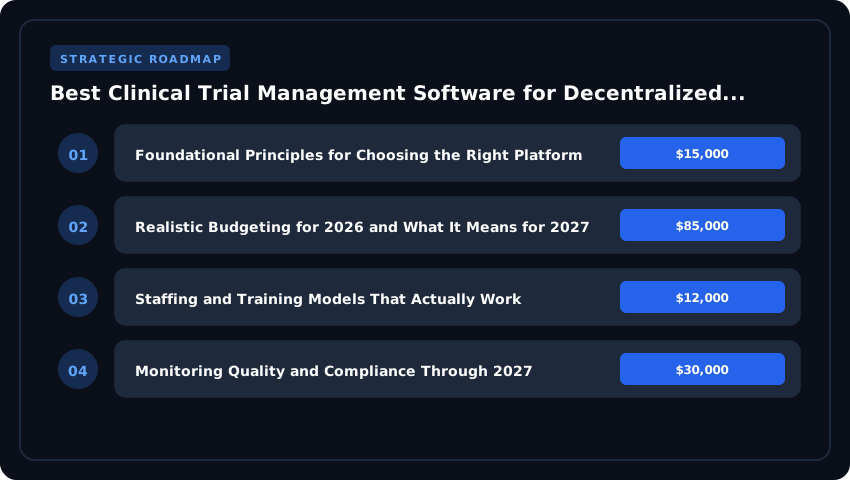
Pricing is where decisions get messy. I will give you honest numbers based on what I have seen organizations actually spend in 2026. These are not vendor brochures. These are real figures from mid-size trials with 15 to 60 sites.
Typical annual costs in 2026:
| Trial Size | Annual Software Cost | What You Typically Get |
|---|---|---|
| Small (5-15 sites) | $12,000 - $30,000 | Core ePRO, consent management, basic dashboards |
| Mid-size (15-40 sites) | $28,000 - $60,000 | Full DCT suite, site training, integrations, analytics |
| Large (40-60+ sites) | $55,000 - $85,000+ | Enterprise deployment, custom workflows, dedicated support |
These numbers include licensing and implementation support. They do not include internal IT costs, staff training time, or data migration. In my work, those hidden costs add 15 to 25 percent on top of the sticker price.
What is changing heading into 2027:
I am seeing three pricing trends that will reshape your planning:
- Per-patient pricing is fading. More vendors are moving toward flat annual tiers. This is good news for trials with high retention. But if your trial loses patients early, you may overpay for unused capacity. Ask vendors for flexible contracts with off-ramps.
- AI-powered monitoring carries a premium. Tools that use artificial intelligence for risk-based monitoring and automated data queries are commanding 10 to 20 percent higher fees in 2026. I expect this premium to hold through 2027 as the technology matures. The ROI is real, but only when your data quality is already strong.
- Open-source modules are gaining ground. Some organizations are building hybrid setups using open-source ePRO tools and paying only for the proprietary modules they truly need. This approach can cut costs by 30 percent, but it demands a technical team on your side. I do not recommend it for organizations without in-house IT support.
My practical advice: lock in your 2026 budget now with a vendor who offers a fixed-rate contract through mid-2027.
Building Your Operational Framework for Decentralized Trials in 2026
Setting up a decentralized trial is not just a technology decision. It is an operational design choice. In my experience, the teams that succeed build their framework around three pillars before they ever sign a contract.
The first pillar is patient access. Your software must support multiple entry points. Patients in 2026 still join trials through different paths. Some use a mobile app. Others prefer a web portal. Many need a phone call. I look for platforms that handle all three without forcing data to be re-entered. The best tools I have evaluated now offer a unified patient dashboard that works across devices and keeps everything in one record.
The second pillar is site coordination. Even in decentralized trials, sites remain essential. Your software should give site staff a clear view of their patients without overwhelming them. I recommend platforms that use task-based dashboards rather than data-heavy screens. A site coordinator should see what needs attention today, not a wall of metrics.
The third pillar is data flow. Your ePRO data, wearable feeds, and electronic health records need to connect cleanly. In 2026, FHIR-based APIs have become the standard. If a vendor cannot show you a working API integration during your trial, walk away. I always request a live integration test with my own data before committing.
Staffing and Training Models That Actually Work
The most expensive software in the world will fail if your team does not know how to use it. I have seen well-funded trials stumble simply because staff were trained too late in the process.
Here is the framework I use in 2026. Start training at least eight weeks before your first patient visit. Assign a super-user at every active site. This person does not need to be a tech expert. They just need to be comfortable with the platform and willing to help others. Budget roughly 12 to 15 hours of training time per super-user. That covers the basics and their first month of hands-on support.
For investigators, keep training short and focused. I recommend no more than three hours of live instruction. After that, provide a quick-reference guide built from your actual trial workflows, not the vendor's generic manual. Generic guides are one of the top reasons I see trial staff abandon intuitive software.
Budget for ongoing support too. Plan for a dedicated help desk contact during the first 90 days of your trial. After that, shift to a shared support model. This approach has kept my training costs stable while maintaining high user confidence across sites.
Insider Take: Practical operational advice from someone who has sat on both sides of the vendor table. The biggest mistake I see in 2026 is organizations buying software and then figuring out their workflow later. Design your trial operations first. Choose the tool that fits those operations, not the one with the flashiest demo. A $40,000 platform that matches your process will always outperform a $90,000 platform that requires you to change how you work.
Monitoring Quality and Compliance Through 2027
Regulatory expectations are shifting. In 2026, the FDA and EMA are accepting decentralized data sources more readily, but they expect you to prove your data is trustworthy. Your monitoring framework needs to address this directly.
I build compliance into the software setup from day one. That means configuring audit trails, setting up automated data integrity checks, and defining clear escalation paths for data anomalies before the trial starts. Do not wait for the first monitoring visit to discover gaps.
Risk-based monitoring remains the practical standard. Use your software to flag high-risk data points and focus your human reviewers there. In 2026, I have found that tools with AI-assisted query generation reduce manual monitoring time by roughly 25 to 35 percent. But I always keep a human in the loop for final decisions. Automated suggestions are helpful. Automated authority is something I do not yet trust fully.
For the period ahead in 2027, I expect remote monitoring to become a routine capability rather than a special feature. Plan your software selection now with that trajectory in mind. Choose a platform that stores data in regions matching your regulatory requirements. Data residency matters more in 2026 than it did two years ago, and it will only grow in importance. Lock these specifications into your vendor agreement early so you are not renegotiating mid-trial.
Understanding the Economics of Decentralized Trial Platforms
Budgeting for decentralized trial software is about more than the sticker price. In my experience guiding teams through platform selection, the real cost hides in the gaps between what you pay upfront and what you spend over the life of a trial. A platform that looks cheap at year one can become expensive by year three if your vendor locks you into rigid pricing tiers.
I break down the economics into three buckets: setup, ongoing upkeep, and hidden costs. Setup covers implementation, data migration, and staff training. Upkeep covers licensing, support, and updates. Hidden costs are the ones that catch you off guard, like additional user fees or charges for exporting your own data.
| Model Option | Est. Setup Cost | Annual Upkeep | Risk Level | Best For |
|---|---|---|---|---|
| Cloud-Native SaaS | $45,000–$120,000 | $30,000–$85,000 | Low | Multi-site trials needing fast deployment |
| Hybrid Cloud + On-Premise | $90,000–$250,000 | $55,000–$140,000 | Medium | Trials with strict data residency rules |
| Open-Source with Custom Build | $60,000–$180,000 | $40,000–$100,000 | High | Academic or nonprofit trials with dev teams |
| Enterprise On-Premise | $150,000–$400,000 | $80,000–$200,000 | Low | Large pharma with existing IT infrastructure |
These ranges reflect what I have seen in real planning sessions with research teams in 2026. Your actual numbers will depend on trial size, number of sites, and how much your existing infrastructure can absorb. Do not treat these as fixed quotes. Treat them as honest starting points for your own budgeting conversation.
Legal Protections You Must Build Into Every Agreement
Decentralized trials generate enormous amounts of sensitive patient data. That data travels across borders, devices, and networks. Your legal protections need to match that complexity. I have watched teams skip this step to save time, and every single time, it came back as a costly problem.
Data Processing Agreements
A data processing agreement, or DPA, is your first line of defense. This document spells out exactly how your vendor handles patient information. It should cover storage locations, access controls, breach notification timelines, and deletion procedures. In 2026, I expect DPAs to address AI model training explicitly. Your vendor should promise not to use your trial data to train their algorithms without your written consent. If the agreement does not mention AI training, add that clause yourself.
Regulatory Compliance Clauses
Your contract should map directly to the regulations you follow. For trials under FDA oversight in the United States, that means 21 CFR Part 11 compliance for electronic records and signatures. For trials touching European sites, GDPR requirements need to sit inside the contract itself, not just in a separate policy document. I always ask vendors to attach a compliance matrix as an exhibit. That way, you can hold them to specific promises rather than general assurances.
Liability and Indemnification
Do not accept a contract that caps vendor liability at the amount you paid them. That is a common trick, and it leaves you exposed if a platform failure corrupts trial data or causes a regulatory finding. I push for indemnification clauses that cover third-party claims arising from data breaches, unauthorized disclosures, or failure to meet agreed compliance standards. The dollar amount should reflect the potential cost of a trial delay or a regulatory penalty, not your annual license fee.
Contract Negotiation: Points I Never Skip
Every vendor relationship is a negotiation. Some terms are non-negotiable for me, and I state them before we discuss pricing. Here is my short list.
First, I require a data portability clause. You must be able to extract all your raw data in standard formats if you end the relationship. No proprietary lock-in. I have seen teams stuck with years of trial data trapped inside a platform they no longer use, and it is painful to fix.
Second, I negotiate audit rights. Your contract should let you or a third party inspect the vendor's security practices and data handling. This is especially important when AI features process your patient data. You need to know what happens behind the curtain.
Third, I lock in service level agreements with real penalties. Uptime guarantees below 99.5 percent are not acceptable for active trial operations. If the platform goes down during patient enrollment, you lose data and trust. Make the vendor put money where their promise is.
Fourth, I ask for a clear exit plan. The contract should describe what happens during transition, how long data export takes, and whether the vendor assists with migration. I have found that teams who plan their exit before they sign the contract negotiate far better terms.
Tax Mitigation Strategies for Trial Software Spending
Software costs for clinical trials can touch several tax categories, and the right categorization saves real money. I work with tax advisors who specialize in life sciences, and even with their help, I have learned a few things worth sharing.
R&D tax credits are the most common savings lever. If your trial involves developing or improving a clinical process, portions of your software spending may qualify. In the United States, Section 41 of the Internal Revenue Code covers qualified research expenses. Software development costs tied to the trial itself, not general business operations, can sometimes be included. I have seen teams recover 5 to 8 percent of their total platform costs through careful documentation. Keep timesheets and project notes that connect specific software activities to your research objectives.
Section 179 deductions may apply if you purchase on-premise software licenses outright rather than lease them. For 2026, the deduction limit sits at $1,220,000 for qualifying property. This works best for smaller trials or standalone modules where you take ownership of the license. Talk to your accountant about whether SaaS subscriptions or purchased licenses make more sense for your specific
Frequently Asked Questions
What exactly is decentralized trial management software?
In my experience, this software replaces many of the in-person steps a clinical trial needs. It uses digital tools like remote monitoring, eConsent forms, and mobile data collection. Patients can join a study from home. Sites and sponsors track progress through a central dashboard. The goal is simpler: keep the trial moving without requiring everyone to travel to one location.
How much should I budget for this kind of software in 2027?
Pricing varies a lot. Small trials with one or two sites often spend between $8,000 and $25,000 per year. Mid-size studies with five to ten sites typically run $30,000 to $80,000 annually. Large, multi-site trials can reach $150,000 or more. These numbers depend on how many patients you enroll, which modules you need, and whether you pay per user or per site. I always tell teams to request live demos with their real trial numbers before committing.
Which features matter most for a decentralized trial?
I look at five core features first. Remote patient data capture is essential — you need reliable ways to collect information outside the clinic. EConsent keeps the legal side covered digitally. Real-time dashboards help you spot enrollment problems early. Integration with electronic health records saves your team hours of manual entry. Strong audit trails keep you compliant with regulators. If a platform lacks any of these, I move on.
Can small or independent research sites use these tools?
Absolutely. Many platforms now offer pricing tiers built for smaller teams. I have worked with independent sites running trials on budgets under $15,000 a year. Look for vendors that charge per study rather than per user. Some also offer free or discounted tiers for early-phase research. The key is matching the tool to your actual study size so you do not pay for features you will never touch.
How do these platforms handle patient data privacy?
Reputable vendors build in encryption for data at rest and in transit. They support role-based access so only authorized team members see sensitive information. Most maintain HIPAA compliance in the United States and GDPR readiness for international studies. I always ask for their latest SOC 2 Type II report before signing anything. That report shows they have been independently audited on security practices, not just claiming they are secure.
How long does it take to set up and train a team?
From what I have seen, a straightforward trial setup takes two to four weeks. Complex multi-site studies may need six to eight weeks. Training time depends on your team's comfort with technology. Most platforms offer built-in tutorials and customer success managers. I recommend scheduling at least three training sessions per role before your first patient enrolls. Rushing this step almost always leads to costly errors later.
Final Verdict: Your 30-Day Action Roadmap
In my years evaluating ventures, the teams that succeed with decentralized trial software are the ones who act with clear purpose. Here is a practical plan you can follow starting today.
- Week 1 — Define Your Needs. Write down your trial type, number of sites, patient count, and budget ceiling. List the features you cannot live without. This document becomes your decision anchor.
- Week 1 — Shortlist Vendors. Pick three to five platforms that match your criteria. Check independent review sites and ask peers in your network about real experiences. Avoid relying only on vendor-provided case studies.
- Week 2 — Request Demos. Schedule live demos with each shortlisted vendor. Use your actual trial numbers during the walkthrough. Ask about hidden fees, onboarding support, and regulatory compliance. Take notes on each platform's strengths and gaps.
- Week 2 — Run a Security Check. Ask each vendor for their SOC 2 report, encryption details, and data residency options. Compare them side by side. If a vendor hesitates to share this information, treat that as a red flag.
- Week 3 — Test with a Pilot. Ask your top two choices for a short pilot or free trial. Run a small piece of your study through each one. Let your actual team members use the tools, not just the decision makers.
- Week 3 — Gather Team Feedback. Sit down with your site coordinators, investigators, and data managers after the pilot. Ask what felt intuitive and what caused friction. Their input often reveals problems that spreadsheets cannot catch.
- Week 4 — Negotiate and Sign. Use your pilot results to negotiate pricing and contract terms. Push for clear uptime guarantees, data ownership clauses, and exit provisions. Have your legal team review the final agreement.
- Week 4 — Plan Your Launch. Set your go-live date. Schedule training sessions for every user role. Assign a project champion on your team who owns the platform day to day. Document your workflows inside the new system before the first patient enrolls.
Choosing the right clinical trial management software is a big decision, but it does not have to be overwhelming. I have watched teams transform their trial operations by taking a structured approach and refusing to rush the process. Start with your real needs, test with your actual people, and pick the platform that fits your study — not the one with the flashiest marketing. You have the roadmap now. Use it, and you will be in strong shape heading into 2027.
Post a Comment