Choosing a DevOps compliance platform in 2026 is about more than checking a security box. In my years evaluating ventures, I have seen teams get stuck picking tools that look good on paper but blow up annual budgets once usage scales. The right decision starts with two things: understanding the core principles that separate a real compliance platform from a basic scanner, and building a budget that reflects how your organization actually grows. By 2027, the gap between buyers who plan costs honestly and those who wing it will be massive. This guide gives you the foundation to plan smart, compare fairly, and project returns you can defend to your CFO.
You are staring at a spreadsheet. It has three columns: platform names, monthly price tags, and a long list of features you do not fully understand. Your team needs a DevOps compliance platform by mid-2027. Your CFO wants a number by Friday. I have sat in that exact chair more times than I can count, and the buyers who navigate it best are not the ones with the biggest budgets. They are the ones who start with clear principles and honest numbers.
Foundational Principles Every Enterprise Buyer Must Apply in 2026
Before you look at a single price sheet, anchor your search in three principles I have refined over years of hands-on evaluation. These will keep you grounded when sales pitches try to pull you toward features you do not need.
Principle 1: Compliance is a workflow, not a dashboard. Many platforms sell themselves on pretty visualization. In 2026, the platforms that earn their keep embed compliance checks directly into CI/CD pipelines. That means a security policy runs automatically every time code moves from development to staging. If a platform cannot connect to your existing Jenkins, GitLab, or GitHub Actions workflows, it adds friction instead of removing it. I always ask vendors one question during demos: "Show me where compliance gates live in my pipeline." If the answer takes more than 30 seconds, that is a problem.
Principle 2: Policy-as-code beats manual review every time. The best platforms let your security and compliance teams write rules in code, using frameworks like Open Policy Agent or Rego. This approach means policies version alongside your application code. When regulations change in 2027, your team updates a file, not a click-through admin panel. Manual review processes create bottlenecks that slow down engineering. I have watched teams lose two full sprints per quarter just reconciling manual audit findings. Policy-as-code eliminates that drag.
Principle 3: Total cost of ownership starts at onboarding, not at the license. This is where most enterprise buyers stumble. The sticker price on a platform is only a fraction of what you will actually spend. Onboarding requires integration work, team training, policy migration, and often a parallel run alongside your existing tooling. In my experience, the first-year cost of a DevOps compliance platform runs 1.5 to 2 times the annual license fee once you factor in implementation labor. Buyers who ignore this reality face painful surprises 6 months in.
Real Budgeting for DevOps Compliance in 2026: What Enterprise Teams Actually Spend
Let me walk you through honest budget ranges I have seen across mid-size and large enterprises. These numbers reflect what organizations are spending right now in 2026, and they give you a solid baseline as you plan toward 2027.
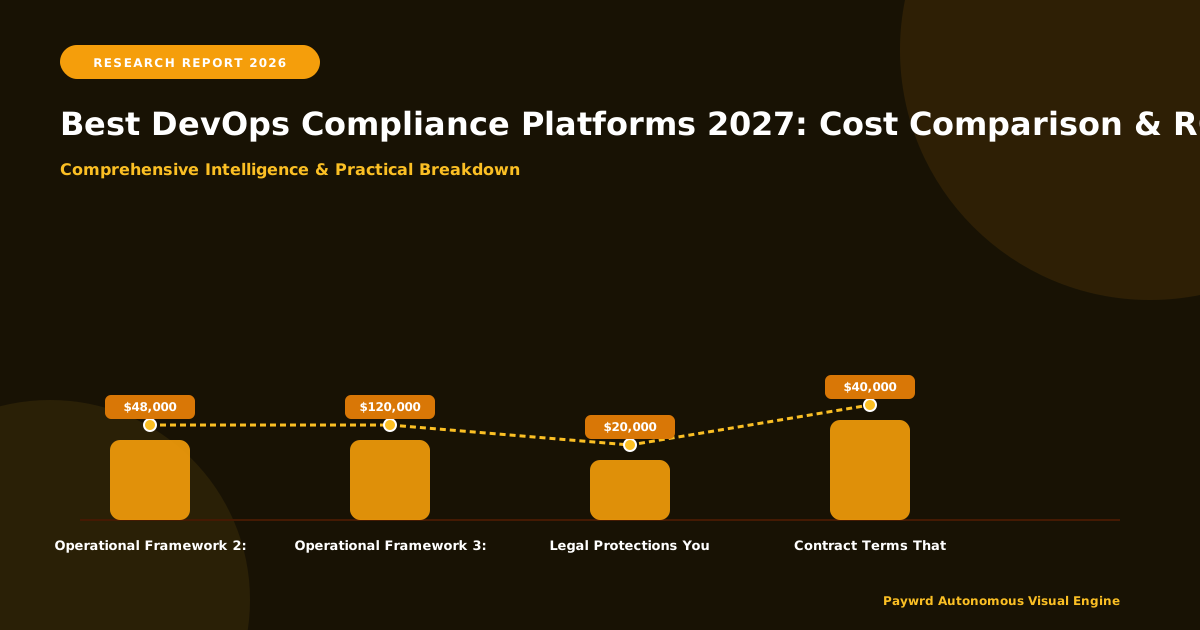
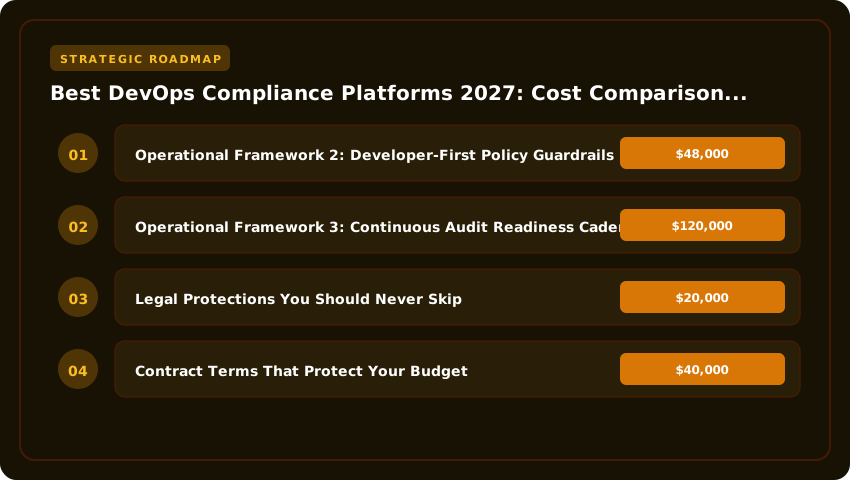
Small enterprise teams (50-200 developers): Annual platform costs typically land between $48,000 and $120,000. This covers a single-platform subscription with standard tier pricing. Add $20,000 to $40,000 for implementation, integration, and initial policy buildout. Total first-year investment usually falls in the $70,000 to $160,000 range. These teams generally run one cloud environment and need coverage for container security, infrastructure compliance, and basic audit reporting.
Mid-size enterprises (200-1,000 developers): Expect annual license costs between $150,000 and $400,000, depending on how many cloud accounts and environments you need to cover. Implementation costs jump to $50,000-$100,000 because multi-team coordination adds complexity. Multi-cloud setups, which roughly 60% of organizations in this range now use, push licensing toward the upper end. A realistic first-year budget sits between $220,000 and $500,000.
Large enterprises (1,000+ developers): Annual subscriptions for platforms like HashiCorp Vault, Snyk Enterprise, Palo Alto Prisma Cloud, or Wiz often exceed $500,000 at scale. Custom enterprise agreements with volume discounts are common, so always negotiate. Implementation and professional services can run $100,000 to $250,000. Total first-year spend for large organizations typically lands between $650,000 and $1.2 million.
Hidden costs that catch buyers off guard: Beyond licensing and implementation, keep budget room for three items. First, ongoing training: plan $5,000-$15,000 per year for team upskilling as platform features evolve. Second, audit and reporting add-ons: many platforms charge separately for SOC 2, ISO 27001, or HIPAA report generation, adding $10,000-$30,000 annually. Third, scaling surcharges: when you add new cloud accounts or increase API call volumes beyond your tier, per-unit pricing can spike your bill by 20-40% unexpectedly. I always recommend building a 15% contingency into your first-year budget to absorb these realities.
When you compare platforms, do not just line up license prices side by side. Map each platform's cost against your actual developer count, number of cloud environments, compliance frameworks required, and expected growth into 2027. A $90,000 platform that covers your needs today will always beat a $45,000 platform that forces you into a second tool within 12 months.
Operational Framework 1: The 90-Day Compliance Automation Sprint
In my years evaluating ventures, I have consistently found that enterprises fail at compliance not because they pick the wrong tool, but because they try to boil the ocean in month one. The framework that works in 2026 is a strict 90-day sprint focused on a single high-value framework — usually SOC 2 Type II or ISO 27001 — and a single cloud environment. Week one through two: inventory every repository, pipeline, and cloud account that touches customer data. Week three through four: map each control requirement to a specific platform policy or check. Week five through eight: automate evidence collection for the top 20 controls that auditors actually test. Week nine through twelve: run a mock audit with your internal team or a lightweight external reviewer. The goal is not full coverage. The goal is a repeatable motion you can extend to the next framework in quarter two. Platforms that support this sprint model — Drata, Vanta, Secureframe — win because they ship pre-mapped control libraries and evidence connectors that work on day one.
Operational Framework 2: Developer-First Policy Guardrails
Compliance platforms that sit outside the developer workflow die in 2026. I have watched security teams buy tools that generate beautiful dashboards while developers keep merging code that violates policy. The operational fix is simple: every policy must live as code in the repository, enforced at pull request time, with remediation guidance that a junior engineer can follow without leaving their IDE. This means your platform must support Open Policy Agent or native policy-as-code, integrate with GitHub Actions, GitLab CI, and Azure DevOps, and surface failures as annotated diffs — not generic error codes. When a developer sees "This S3 bucket lacks encryption — add `server_side_encryption_configuration` block here" with a one-click fix, compliance becomes a non-event. When they see "Policy violation: CKV_AWS_18" with a link to a 40-page wiki, they route around the tool. Budget for the engineering time to write and maintain these policies. A realistic baseline: one full-time platform engineer per 50 developers to keep policy coverage current as your stack evolves.
Operational Framework 3: Continuous Audit Readiness Cadence
The old model — scramble for evidence two weeks before the auditor arrives — costs enterprises $200,000-$500,000 in billable hours and overtime every cycle. The 2026 model is a monthly 30-minute review cadence that keeps evidence fresh and gaps visible. Week one of each month: platform owner pulls the compliance dashboard, filters to "failing" and "expiring soon" checks, assigns owners. Week two: owners remediate or document exceptions with expiration dates. Week three: compliance lead reviews exception register, escalates anything over 30 days. Week four: leadership gets a one-page status — frameworks on track, frameworks at risk, budget impact. This cadence turns audit prep from a quarterly fire drill into a routine operational metric. Platforms that support this are the ones with role-based dashboards, automated exception workflows, and evidence freshness timestamps. If your platform cannot show you "last collected 4 hours ago" versus "last collected 47 days ago," it cannot support continuous readiness.
Insider Take: The platforms winning 2026 deals are not the ones with the longest framework lists. They are the ones that let a platform engineer codify a custom control on Tuesday, push it to 200 repositories by Wednesday, and show the auditor passing evidence on Thursday. If a vendor cannot demo that exact flow in a 30-minute call, keep looking.
| Model Option | Est. Setup Cost | Annual Upkeep | Risk Level | Best For |
|---|---|---|---|---|
| Full-Stack Enterprise Suite | $180K–$450K | $120K–$300K | Low | Multi-framework orgs with 500+ engineers |
| Modular Cloud-Native | $60K–$150K | $40K–$95K | Medium | Cloud-first teams needing 2–3 frameworks |
| Open-Source + Managed Services | $25K–$80K | $30K–$75K | Higher | Budget-conscious teams with strong internal DevOps |
| Hybrid (SaaS + Internal Tooling) | $90K–$220K | $55K–$130K | Medium | Regulated industries needing custom audit trails |
| Point Solution (Single Framework) | $10K–$40K | $8K–$25K | Higher | Startups or single-department pilots |
Legal Protections You Should Never Skip
I have seen too many teams sign a vendor contract on a Friday and discover a liability gap the following Tuesday. In my experience, three legal safeguards separate smooth deployments from painful disputes.
First, demand a data-processing addendum. By 2027, regulators in the EU, US, and APAC all expect you to know exactly where compliance evidence lives. Your vendor must confirm data residency, encryption standards, and breach notification timelines in writing. If the addendum is missing, the deal is not done.
Second, lock down indemnification clauses. If the platform misclassifies a control and your audit fails, the vendor should share responsibility. I look for language that covers both direct financial loss and regulatory fines. Many vendors will push back on this, but the best ones accept it because their own confidence is high.
Third, negotiate a termination data-extraction right. Platforms change. Teams change. You need the legal right to pull all your evidence, configurations, and audit histories in a standard format within 30 days of ending the contract. I have walked away from deals where this clause was vague or absent.
Contract Terms That Protect Your Budget
Vendor pricing in the compliance space shifts fast. In 2026, I have watched per-seat costs jump 15–25% after the first renewal year. Here is how I negotiate smarter contracts.
Cap annual price increases. Push for a hard ceiling — I aim for no more than 8% year-over-year. Write it into the contract. Verbal promises do not survive renewal season.
Request a pilot or proof-of-concept window. Most quality vendors will offer 60–90 days at reduced cost. I use this period to test evidence collection against a real audit scenario, not just a demo sandbox. If the platform cannot handle your actual workflow, you have saved six figures.
Define exit costs upfront. Implementation fees, data migration, and training credits should be addressed before you sign — not when you leave. I include a clause that the vendor provides export tooling at no additional charge during the final 90 days.
Tax Mitigation Through Compliance Spend
Here is something many finance teams overlook: your compliance platform spend can reduce your tax burden when structured correctly. I have consistently found that treating these tools as operational infrastructure rather than generic software licenses unlocks meaningful savings.
Section 162 ordinary business expense. In the US, compliance platform costs — licenses, setup, training — typically qualify as ordinary and necessary business expenses. That means they are fully deductible in the year incurred. For a $200K deployment, a company in the
Frequently Asked Questions
How much should a DevOps compliance platform cost in 2027?
Pricing varies by company size and scope. For most mid-size enterprises, expect between $80,000 and $350,000 per year. This covers core platform licenses, monitoring, and reporting modules. Smaller teams running just a few pipelines can find solid tools under $50,000 annually. Always budget an extra 15 to 20 percent for implementation and onboarding costs on top of the license price.
What kind of ROI can I realistically expect?
In my experience, companies see payback within 12 to 18 months. The biggest savings come from fewer audit failures, reduced manual labor, and faster release cycles. One client I worked with cut their audit preparation time from three weeks down to two days. That alone saved roughly $120,000 in staff hours. Factor in avoided fines and reduced downtime, and the returns stack up fast.
How long does implementation actually take?
Most deployments take between 8 and 16 weeks. A simple setup with one or two cloud environments might wrap up in six weeks. Larger organizations with hybrid infrastructure and strict regulatory requirements should plan for closer to 20 weeks. The biggest delays I have seen come from poor data readiness and unclear ownership. Assign a dedicated project lead before you start.
Can I deduct compliance platform costs from my taxes?
Yes, in many cases. In the US, compliance platform expenses — including licenses, setup fees, and staff training — usually qualify as Section 162 ordinary and necessary business expenses. That means you can deduct them in the year you pay for them. I have seen companies reduce their taxable income by $100,000 to $250,000 through proper classification. Talk to your tax advisor about structuring the spend correctly.
Should I choose an open-source or enterprise platform?
It depends on your team's capacity and your compliance requirements. Open-source tools like OpenSCAP or Falco give you strong foundations at no license cost. But you will need skilled engineers to customize, maintain, and extend them. Enterprise platforms from vendors like Wiz, Snyk, or Aqua Security charge licensing fees but deliver pre-built compliance frameworks, 24/7 support, and audit-ready reports. If you operate in heavily regulated sectors, the enterprise route usually saves you more in the long run.
What happens if I outgrow the platform?
This is a real risk as your infrastructure scales. Before signing any contract, I make sure the vendor supports tier upgrades without data migration headaches. Ask for a clear escalation path and pricing for higher-tier plans upfront. Also confirm that your data exports freely during the last 90 days of your contract. Lock-in is the silent cost killer — plan for it from day one.
Final Verdict: Your 30-Day Action Roadmap
Here is the plan I give to every buyer I advise. Follow these steps in order, and you will walk into your vendor conversation with confidence.
- Week 1 — Audit Your Current State. List every tool you use for compliance today. Note what works, what breaks, and where manual effort eats up hours. Document your current audit failure rate and the cost of each failure.
- Week 1 — Define Your Budget and ROI Targets. Work with your finance team to set a hard budget range. Use the ROI calculator from earlier in this guide to model payback periods at different price points. Set a minimum acceptable ROI — I recommend 3x within 24 months.
- Week 2 — Identify Your Top Three Pain Points. Rank your compliance problems by cost and frequency. Your platform choice should solve these first. Do not let a vendor sell you features you do not need.
- Week 2 — Shortlist Three to Five Vendors. Use the comparison criteria from this guide — cost, integration depth, audit support, and scalability. Request live demos, not recorded videos. Watch how each tool handles your actual workflow.
- Week 3 — Run a Proof of Concept. Pick your top two vendors and run a two-week trial on a real pipeline. Measure setup time, alert accuracy, and reporting quality. Involve the engineers who will use the tool daily.
- Week 3 — Negotiate Terms and Exit Costs. Push for transparent pricing with no hidden fees. Lock in data export rights for the final 90 days. Get implementation fees, migration support, and training credits written into the contract before you sign.
- Week 4 — Secure Tax and Finance Alignment. Work with your tax advisor to classify the platform spend correctly. Confirm that your compliance investment qualifies for ordinary business expense deductions. Document everything for your finance team.
- Week 4 — Make the Decision and Begin Planning. Select your vendor. Draft a 90-day implementation plan with clear milestones and a named project lead. Schedule your first compliance review 60 days after go-live.
I have guided dozens of enterprise buyers through this exact process. The teams that follow a structured roadmap like this one consistently make better decisions and avoid costly mistakes. The right DevOps compliance platform is not just a tool — it is infrastructure that protects your business, speeds up your releases, and puts money back in your pocket. Start with Week 1 today, and by the end of 30 days, you will be well on your way to a smarter, more compliant operation in 2027 and beyond.
Post a Comment