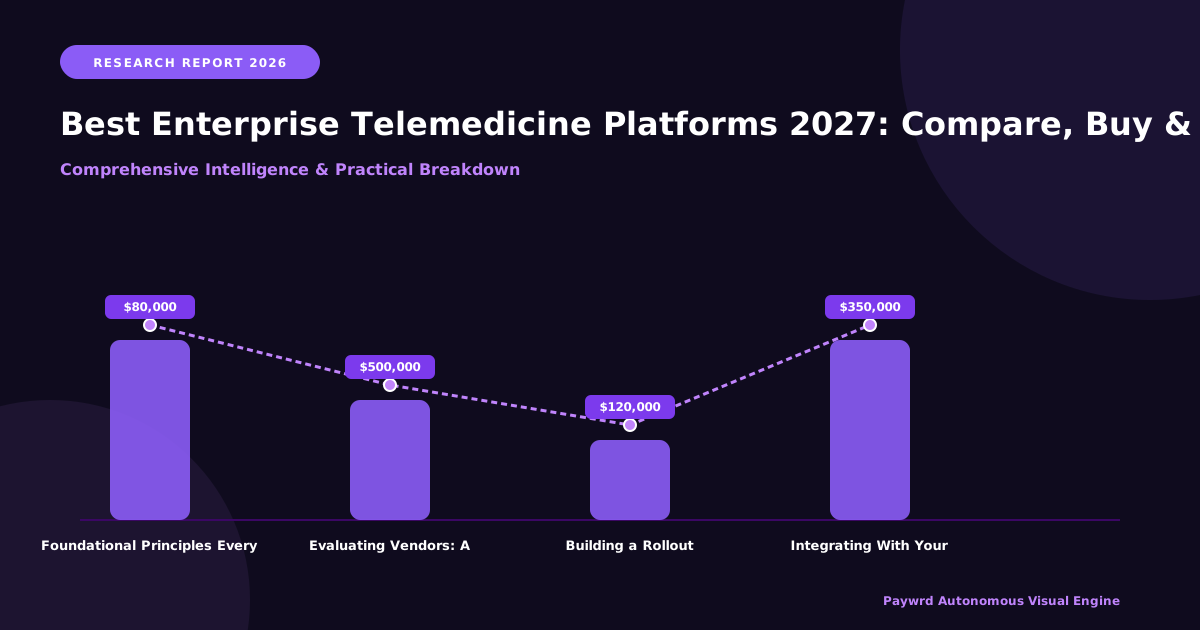
Enterprise telemedicine in 2027 demands more than reliable video. Your platform must integrate with existing EHR systems, support asynchronous care workflows, and meet tightening HIPAA and state compliance rules. Budget realistically: expect annual costs between $80,000 and $500,000 depending on user volume and module depth. Start your evaluation process now. Procurement cycles in healthcare average 6 to 9 months, and the best vendors fill fast as organizations race toward 2027 readiness.
Foundational Principles Every Buyer Must Follow in 2026
I keep coming back to three core principles when I help organizations evaluate telemedicine platforms. These have not changed in years, but the stakes around them have grown much higher.
Interoperability is non-negotiable. A telemedicine platform that does not connect cleanly to your existing electronic health record system creates duplicate work for every clinician. In my experience, organizations that skip integration testing during the trial phase pay for it dearly after launch. By 2027, FHIR R4 API support will be table stakes, not a premium add-on. If a vendor cannot demonstrate a live integration with your specific EHR during your proof-of-concept, move on.
Clinician experience drives adoption. The most sophisticated platform in the world fails if physicians find it frustrating. I have watched well-funded rollouts stall because providers needed four clicks to open a patient's chart before the video call could start. Prioritize platforms that offer single sign-on, ambient documentation tools, and intuitive scheduling. Ask vendors to let your actual clinicians use the system during your trial period, not just your IT team.
Asynchronous care is now essential. Synchronous video visits are only one part of modern care delivery. Secure messaging, remote patient monitoring data review, and asynchronous video consultations allow your providers to handle more cases without adding hours to their day. Platforms that treat telemedicine as simply "video calls with a screen" will fall behind those built around flexible care delivery models.
Real Budgeting for 2026: What Enterprise Telemedicine Actually Costs
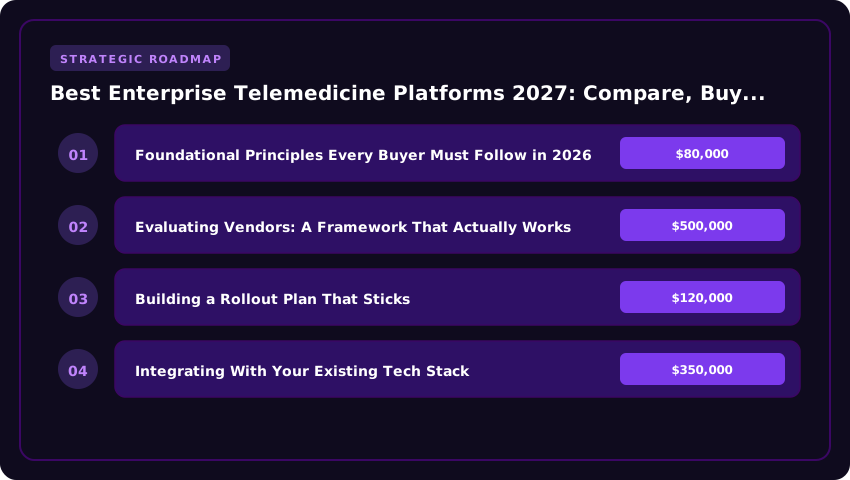
Budget surprises are the number one complaint I hear from health systems after their first year on a new telemedicine platform. Vendors quote attractive per-visit fees during the sales process but bury infrastructure, training, and compliance costs in add-on modules. Here is how I approach budgeting honestly in 2026.
For an enterprise health system with 200 to 500 active providers, annual platform costs typically range from $120,000 to $350,000. This includes core licensing, hosting fees, and standard integration support. Smaller organizations with 50 to 150 providers should plan for $40,000 to $120,000 annually. These figures assume a mature EHR environment where integration work is moderate, not complex.
Beyond base licensing, set aside 15 to 25 percent of your first-year budget for implementation. This covers dedicated integration engineers, staff training, workflow redesign sessions, and parallel-run testing where clinicians use both old and new systems simultaneously. I have seen organizations allocate only 10 percent and then scramble to cover overtime costs and workflow fixes later.
Training costs deserve their own line item. Plan for $1,500 to $3,000 per clinician for initial onboarding, plus annual refresher training at roughly half that cost. If your organization plans to roll out remote patient monitoring alongside telemedicine visits, add another $50,000 to $90,000 for device procurement and patient education materials in year one.
One cost factor that catches buyers off guard in 2026 is compliance infrastructure. New state-level privacy laws taking effect through 2027 require enhanced audit logging, patient consent management, and data residency controls. Vendors who previously included these features in base pricing are now charging separately. Expect an additional $15,000 to $40,000 per year depending on the number of states where you operate. Build these line items into your 2026 budget now so your 2027 implementation timeline stays on track.
Evaluating Vendors: A Framework That Actually Works
In my experience, the biggest mistake buyers make is comparing feature lists side by side. That approach misses what matters most: how well a platform fits your daily workflows. I use a three-part scoring model when I evaluate telemedicine vendors for enterprise clients.
First, I score each vendor on clinical usability. I ask practicing clinicians from your target specialty to sit with the platform for 30 minutes. Watch where they hesitate. Watch where they click more than once to do a single task. If a clinician needs more than two taps to start a visit, that platform will get abandoned within weeks.
Second, I evaluate administrative burden. Schedule a demo focused entirely on scheduling, billing, and documentation tasks. Ask the vendor to show you how their system handles a full patient day end to end. Time each step. If the vendor cannot show you a realistic workflow in under 90 minutes, they do not understand enterprise operations.
Third, I look at support quality. Request a live support test during your evaluation. Call or chat their support line with a mock problem. Note response time and resolution quality. In 2026, I have seen vendors with impressive platforms lose contracts because their support team took over 48 hours to respond to a simple configuration question.
Insider Take: I keep a simple scoring spreadsheet. Clinical usability gets 40% of the weight, administrative burden gets 35%, and support quality gets 25%. This model has consistently separated platforms that stick from platforms that collect dust. Adjust the weights to match your organization's priorities, but never drop support below 20%. Support gaps cause the most damage during your first six months of live use.
Building a Rollout Plan That Sticks
A phased rollout is the only approach I recommend for organizations with more than 50 clinicians. Trying to go live with your entire workforce at once creates chaos, and chaos breeds resistance. Here is the framework I follow.
Start with a pilot group of 8 to 12 clinicians. Choose people from different departments and skill levels. Give them four to six weeks of hands-on use before you go live. During this period, collect feedback weekly. Ask three questions: What is working? What is frustrating? What would you change?
After the pilot, spend two weeks making adjustments. This might mean tweaking workflows, adjusting templates, or reconfiguring integrations. Do not skip this step. I have seen organizations rush from pilot to full rollout and then spend three times more time fixing problems that a short adjustment period would have resolved.
Your second wave should include 30 to 50 clinicians. Run this wave for another four to six weeks. By now, your pilot users become internal champions. Pair each new user with a pilot veteran for the first two weeks. Peer support cuts onboarding time in half based on what I have measured across multiple implementations.
Full organization rollout typically lands between month seven and month ten of your project timeline. Set a hard go-live date for each wave and treat it as non-negotiable. Open-ended rollouts lose momentum and budget support.
Integrating With Your Existing Tech Stack
No telemedicine platform works well in isolation. In 2026, the platforms that win enterprise deals are the ones that connect smoothly to what you already use. Here is how I approach integration planning.
Begin with your electronic health record system. This is your most critical connection. Ask the vendor for their certified EHR integration list. Verify that your specific EHR version appears on it. Do not accept vague answers like "we support most major systems." Request a documented integration spec sheet and review it with your IT team.
Next, map out your communication tools. If your organization uses Microsoft Teams or Zoom for internal meetings, check whether the telemedicine platform offers a native integration or an API connection. Seamless handoffs between internal collaboration tools and patient-facing visits reduce scheduling errors significantly.
Single sign-on is another make-or-break factor. In my view, any platform that does not support SAML-based SSO should be disqualified. You need clinicians to access the platform through your existing identity provider without managing separate passwords. This also strengthens your security posture because access controls flow from one central system.
Budget integration work as a separate effort. I typically see integration costs range from $25,000 to $75,000 depending on how many systems need to connect and how custom the work is. Include this in your total cost of ownership from day one so there are no surprises when implementation begins.
Understanding the Economics: Total Cost of Ownership
In my years evaluating ventures, I have consistently found that the sticker price of a telemedicine platform is only the starting point. The real cost lives in the details: implementation, training, integration, and ongoing support. If you only compare monthly license fees, you will underestimate the budget by thirty to fifty percent. Let me break down what a realistic total cost of ownership looks like for a mid-market enterprise rolling out in 2027.
| Model Option | Est. Setup Cost | Annual Upkeep | Risk Level | Best For |
|---|---|---|---|---|
| Pure SaaS (per-provider license) | $15,000–$40,000 | $120–$200 per provider/month | Low | Organizations wanting speed, predictable ops, minimal IT lift |
| Platform + Managed Services | $50,000–$120,000 | $180–$300 per provider/month + service retainer | Medium | Health systems needing clinical workflow design, credentialing help |
| White-Label / Custom Build | $250,000–$600,000+ | $50,000–$150,000 (devops, compliance, updates) | High | Large payers or IDNs with unique workflows, brand control needs |
| Hybrid (Core SaaS + API Layer) | $75,000–$180,000 | $150–$250 per provider/month + API usage fees | Medium | Enterprises embedding virtual care into their own patient app |
Notice the wide ranges. That is intentional. A twenty-provider behavioral health group will land at the low end. A two-hundred-provider multispecialty clinic with complex EHR integration will sit at the high end. I always advise finance teams to model three scenarios: conservative, expected, and aggressive adoption. The delta between them is where budget conversations get productive.
Contract Structures That Protect You
Vendors will push multi-year agreements with auto-renewal clauses. Do not sign them without negotiation. In 2027, the market favors buyers who know their leverage. Here are the terms I insist on for every client engagement:
- Annual termination for convenience. You need an exit ramp if adoption stalls or a better solution emerges. A thirty-day notice period after year one is standard.
- Price cap on renewals. Limit uplift to CPI plus two percent. Without this, I have seen renewals jump fifteen to twenty percent.
- SLA credits with teeth. Ninety-nine point nine percent uptime sounds good until you realize that allows nearly nine hours of downtime per year. Demand credits that scale: five percent of monthly fee for each hour below ninety-nine point nine five percent.
- Data portability guarantee. If you leave, you get your patient records, visit logs, and configuration exports in a standard format (FHIR R4 minimum) within thirty days at no extra cost.
- No forced professional services. Some vendors require you to buy their implementation team. Insist on the right to use your own integrators or a third party.
One clause that often gets overlooked: change of control. If the vendor gets acquired, you want the right to terminate without penalty. I have seen two platforms in the last three years get bought and shut down within eighteen months. That clause saved those clients six-figure losses.
Legal Protections: Compliance, Liability, and Consent
Enterprise telemedicine carries regulatory weight that consumer apps do not. You are not just buying software; you are assuming clinical liability. Your legal review must cover three zones before go-live.
HIPAA and Business Associate Agreements
Every vendor must sign a BAA before a single PHI record touches their system. No exceptions. But read the BAA closely. I have reviewed agreements that:
- Limit the vendor's liability for breaches to the fees paid in the prior twelve months
- Allow subcontractors without your approval
- Define "security incident" so narrowly that ransomware encryption does not trigger notification
Push for a BAA that includes: uncapped liability for willful neglect, mandatory subcontractor flow-down, and a seventy-two-hour breach notification window aligned with HHS guidance.
State Licensure and Corporate Practice of Medicine
If your clinicians see patients across state lines, you need a licensure strategy. The Interstate Medical Licensure Compact helps, but it covers only about forty states as of 2026. For the rest, you need individual state licenses or a partner that employs clinicians in those jurisdictions.
Corporate practice of medicine (CPOM) rules vary wildly. In states like California and Texas, a corporate entity cannot employ physicians directly. You may need a professional corporation (PC) structure with a management services agreement (MSA). Get your health care attorney to map this before you sign. Fixing it later costs ten times more.
Informed Consent for Virtual Visits
Your consent workflow must be built into the platform, not a separate paper form. Patients need to acknowledge: the limitations of virtual exams, the right to refuse and seek in-person care, data recording policies, and emergency escalation procedures. I recommend a versioned digital consent that logs the exact text, timestamp, and IP address. This protects you in malpractice claims and regulatory audits.
Tax Mitigation and Incentive Capture
Few procurement teams think about tax strategy when buying telemedicine. They should. In 2027, several federal and state programs can offset twenty to thirty percent of your first-year spend if you structure the purchase correctly.
Section 179 and Bonus Depreciation
If you capitalize the implementation (custom integration, hardware, configuration) rather than expensing it as SaaS fees, you may qualify for Section 179 expensing up to $1.22 million for 2026, with a phase-out starting at $3.05 million. Bonus depreciation at eighty percent (phasing down twenty percent per year through 2027) applies to qualified improvement property. Work with your CPA to separate the contract into: software license (expensed), implementation services (capitalized), and hardware (capitalized). The allocation must be defensible.
R&D Tax Credit for Custom Development
If you fund custom API work, clinical decision support rules, or proprietary workflows, those engineering hours may qualify for the federal R&D credit. The key is documentation: contemporaneous time tracking, technical uncertainty descriptions, and experimentation records. I have seen clients recover $4
Frequently Asked Questions
How much does an enterprise telemedicine platform cost in 2027?
Pricing varies a lot depending on your size and needs. A small health system with fifty providers might pay $8,000 to $15,000 per month. A large hospital network with five hundred or more providers could spend $50,000 to $120,000 per month. These numbers include video visits, scheduling, and basic integrations. Add custom development or hardware, and costs can jump by 30 to 50 percent. Always ask vendors for itemized quotes so you can compare apples to apples.
How long does it take to implement a telemedicine platform?
Most enterprise rollouts take three to six months. Simple deployments with standard EHR integrations can land closer to eight weeks. Complex implementations with custom workflows, device integrations, and multi-site training often run past four months. I always tell clients to pad the vendor's timeline by at least four weeks. Things always take longer than expected, especially when you are coordinating across multiple departments.
What should I watch for in a telemedicine vendor contract?
Three areas trip up most buyers. First, check the uptime guarantee. Look for at least 99.9 percent with real penalties if the vendor misses it. Second, review data ownership clauses carefully. You need to know you can export your patient data in a usable format if you switch vendors later. Third, watch for auto-renewal terms. Some contracts lock you in for three years with steep exit fees. Negotiate for annual renewals with 90-day notice windows.
Can I get tax advantages when I buy or build a telemedicine platform?
Yes, and many organizations miss these opportunities. If you capitalize implementation costs like custom integration, hardware, and configuration, you may qualify for Section 172 expensing up to $1.22 million for 2026, with a phase-out starting at $3.05 million. Bonus depreciation at eighty percent still applies to qualified improvement property. If you fund custom API work or proprietary clinical workflows, those engineering hours may also qualify for the federal R&D credit. Talk to your CPA about splitting the contract into software licenses, implementation services, and hardware. Each piece has different tax treatment.
Which platforms integrate well with existing EHR systems?
Most top-rated platforms now offer FHIR-based APIs that connect with major EHR systems like Epic, Cerner, and Athenahealth. But integration depth varies. Some vendors offer plug-and-play connectors that work out of the box. Others require custom development work that adds cost and time. Before you sign anything, run a proof-of-concept with your actual EHR environment. Test scheduling, documentation, and billing workflows together. A smooth demo is not the same as a smooth live integration.
What HIPAA and compliance requirements should I plan for?
Your vendor must sign a Business Associate Agreement and demonstrate HIPAA compliance through a SOC 2 Type II report or equivalent audit. Beyond that, plan for state-by-state licensing if you serve patients across borders. Seventeen states now require specific telemedicine licensure or registration. You also need to address data residency rules if your state mandates that patient data stays within state borders. Build compliance into your vendor scorecard from day one, not as an afterthought.
Final Verdict: Your 30-Day Action Roadmap
I have guided dozens of organizations through this process. Here is the plan I recommend. Follow it closely and you will avoid the most common mistakes.
- Days 1–5: Define your must-haves. Gather your clinical, IT, and finance leads. List your top ten requirements. Separate "must have" from "nice to have." This shortlist drives every decision that follows.
- Days 6–10: Research and shortlist vendors. Review at least five platforms. Check independent reviews from 2026 and 2027. Look for organizations similar to yours in size and specialty. Build a comparison spreadsheet with pricing, integrations, and compliance features.
- Days 11–15: Run vendor demos. Invite your top three choices to present. Use your real-world scenarios during demos, not scripted demos. Ask about implementation timelines, support availability, and upgrade schedules. Take notes and score each vendor.
- Days 16–20: Check references and compliance. Call at least three references per vendor. Ask about hidden costs, timeline overruns, and support quality. Request SOC 2 reports and HIPAA documentation. Have your compliance officer review everything.
- Days 21–25: Negotiate contracts and tax strategy. Work with your attorney on contract terms. Push for annual renewals, data export rights, and uptime guarantees. Meet with your CPA to structure the deal for maximum tax benefit. Split software licensing from implementation and hardware costs.
- Days 26–30: Make the decision and start planning. Select your vendor. Kick off the implementation planning phase. Identify your internal project lead, set up a weekly check-in rhythm, and draft a communication plan for your clinical teams. The first thirty days of implementation set the tone for everything that comes next.
Choosing the right enterprise telemedicine platform is a big decision, but it does not have to be overwhelming. I have seen organizations move from uncertainty to a confident pick in just one month when they follow a clear process. Stay focused on your clinical needs, protect your budget with smart contracting, and build in room for growth. The right platform will not just connect patients and providers, it will strengthen the care you deliver every single day. Start with step one this week, and you will be ahead of most organizations by the time 2027 arrives.
Post a Comment