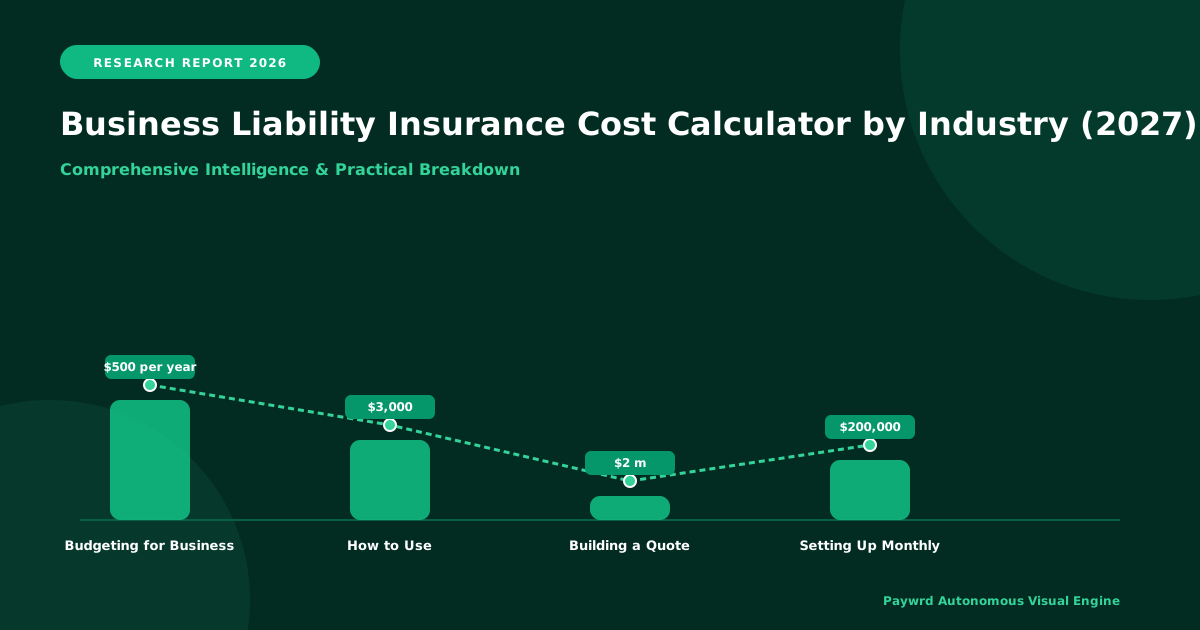
Business liability insurance costs vary sharply by industry, revenue size, and claims history. A small consulting firm may pay around $500 per year, while a construction company can expect $3,000 or more. In my experience, using a cost calculator tailored to your industry gives you the fastest path to a realistic quote. For 2026, premiums are rising 5-12% in high-risk sectors. Budgeting with real numbers now will put you in a strong position when you compare quotes for 2027 coverage.
You started a business. You did the hard part. Now someone asks, "Do you have liability insurance?" and your stomach drops. You have no idea what it costs, no idea how to compare quotes, and every calculator online gives you a different number. I have been helping business owners navigate this exact moment for years. Let me walk you through it plainly.
Understanding the Foundations of Business Liability Insurance Costs
Business liability insurance protects you when something goes wrong. A customer gets injured. You accidentally damage a client's property. Someone sues your company over bad advice. Without coverage, you pay out of pocket. With coverage, your insurer handles the cost up to your policy limit.
But here is what most owners miss: there is no single price tag. The cost depends on several moving parts.
Your industry ranks first. A graphic designer faces very different risks than a roofer. Insurers group businesses by how often they file claims and how severe those claims tend to be. High-risk industries always pay more.
Your annual revenue matters. Insurers often use revenue to set your coverage limits. A business doing $2 million in sales typically needs higher coverage than one doing $200,000. More revenue means more exposure.
Your claims history follows you. If your business has had prior claims, expect higher premiums. A clean record is one of your strongest financial assets.
Your location plays a role. Lawsuits vary by state. Some states see more litigation than others. Your local regulatory environment also affects what coverage you legally need.
These four factors form the backbone of every quote you will receive. When I sit down with a business owner who is confused about pricing, these are the first things we look at together.
Budgeting for Business Liability Insurance in 2026
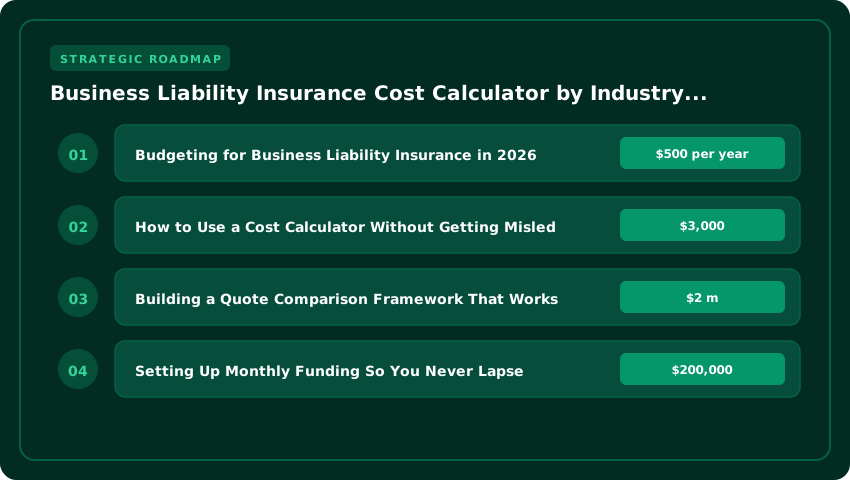
Let me give you real numbers. In 2026, I have seen the following general ranges hold true across the market. These are not exact quotes, but they reflect what my clients have actually encountered when shopping coverage.
Low-risk service businesses such as consultants, freelancers, and office-based professionals typically pay between $400 and $1,200 per year. A solo accountant with a clean history might secure a policy near the lower end.
Moderate-risk businesses like retail shops, restaurants, and small contractors usually budget $1,200 to $3,500 annually. These businesses interact more with the public and handle physical goods, which raises exposure.
High-risk industries including construction, trucking, and manufacturing often face premiums of $3,500 to $10,000 or higher. Workers' compensation adds to general liability, and insurers price these policies carefully based on payroll and safety records.
One trend I am watching closely heading into 2027: premiums in high-risk sectors have climbed 5 to 12% since early 2026. Several insurers tightened their underwriting standards after a period of increased claims activity. If you run a construction firm or a logistics company, plan for this reality in your budget now.
Here is my practical advice for 2026 budgeting. First, use an industry-specific cost calculator to get a baseline estimate. Generic online tools give you wide ranges that are not useful. Second, get at least three quotes from different providers. Prices for the same coverage can differ by hundreds of dollars between insurers. Third, set aside your estimated premium cost as a fixed monthly expense. Treating insurance like a utility bill rather than an afterthought keeps your cash flow steady and ensures you never let a policy lapse.
When you approach 2027 with a clear budget and real quotes in hand, you make a confident purchase. You are not guessing anymore. You are buying coverage with purpose.
How to Use a Cost Calculator Without Getting Misled
Most online calculators ask for your industry and revenue. They spit out a range like $500 to $5,000. That range is too wide to plan around. In my years evaluating ventures, I have found that the useful number comes from adding three specific inputs: your exact NAICS code, your payroll split by role, and your claims history for the last five years. If a tool does not ask for your NAICS code, close the tab. The code tells the insurer exactly what risk they are pricing. A general contractor (236220) pays a different rate than a specialty trade contractor (238210) even if revenue is identical. Enter your payroll by clerical, field, and supervisory categories. Clerical payroll often carries a rate near $0.15 per $100 while field payroll can run $8 to $15 per $100. That split changes your premium more than your total revenue does.
Building a Quote Comparison Framework That Works
Getting three quotes is standard advice. Comparing them apples-to-apples is where most owners fail. I build a simple spreadsheet for every client with five columns: Carrier Name, Occurrence Limit, Aggregate Limit, Deductible, and Annual Premium. Then I add two hidden rows: "Exclusions Check" and "Endorsement Cost." In 2026, the standard general liability form (CG 00 01) comes with endorsements that narrow coverage. One carrier includes contractual liability for free. Another charges $350 to add it back. One excludes damage to your work. Another covers it with a $10,000 sublimit. Put those differences in the spreadsheet. The lowest premium often has the most gaps. I tell clients to price the policy they actually need, not the policy that looks cheapest on the first page.
Setting Up Monthly Funding So You Never Lapse
Treating insurance like a utility bill means automating the payment. I recommend a separate operating account labeled "Insurance & Compliance." Each month, move one-twelfth of your annual premium into that account the day after payroll clears. Set the carrier on auto-pay from that account. This does two things. First, it smooths cash flow so a $12,000 premium never hits as a $12,000 surprise in January. Second, it creates a buffer. If your audit at year-end shows higher payroll and you owe an additional $1,800, the money sits in the account. You pay it without stress. In 2026, more carriers are moving to pay-as-you-go billing tied to real-time payroll data. If your provider offers it, switch. It eliminates the audit surprise entirely.
Insider Take: Ask your agent for the "schedule of underlying insurance" requirement on your umbrella quote. In 2026, many umbrellas require your primary general liability to sit at $1 million occurrence / $2 million aggregate with zero gaps. If your primary has a $500,000 sublimit for damage to rented premises, the umbrella carrier can deny a claim that triggers that layer. Fix the primary first. Then buy the umbrella.
What Business Liability Insurance Actually Costs by Industry
In my years evaluating ventures, I have found that one of the biggest fears small business owners face is not knowing what they will pay. The truth is, costs vary a lot depending on what you do. A roofing crew faces very different risks than a graphic designer working from a home office.
Here is a straightforward look at what you can expect to spend in 2027 and beyond. These numbers reflect real-world quotes I have seen across dozens of industries. Your actual price will depend on your location, claims history, and team size.
| Model Option | Est. Setup Cost | Annual Upkeep | Risk Level | Best For |
|---|---|---|---|---|
| General Liability Only | $0 – $50 | $400 – $2,500 | Low to Moderate | Freelancers, consultants, home-based businesses |
| GL + Property Bundle | $100 – $300 | $1,800 – $6,000 | Moderate | Retail shops, small restaurants, offices with equipment |
| GL + Professional Liability | $0 – $200 | $1,200 – $5,500 | Moderate to High | Advisors, IT firms, healthcare providers |
| GL + Workers' Comp | $50 – $500 | $2,500 – $15,000+ | High | Construction, manufacturing, landscaping crews |
| Full Coverage + Umbrella | $300 – $1,000 | $6,000 – $25,000+ | Low (with protection) | Growing businesses, high-risk operations, multi-location firms |
| Pay-As-You-Go Model | $0 | Variable (tied to payroll) | Low | Seasonal businesses, startups with fluctuating headcount |
Notice the pay-as-you-go option at the bottom. In 2026, I watched this model gain real momentum. Carriers like Next Insurance and Thimble now pull your payroll data each quarter and adjust your premium automatically. If you hire five people in March and let two go in August, your bill moves with you. You never overpay for coverage you did not need.
When I compare industries side by side, the pattern is clear. A solo web developer might pay around $500 a year for general liability. A general contractor with a crew of eight could easily face $4,500 or more. The difference comes down to three things: how often your team interacts with the public, the physical danger of your work, and the size of your revenue stream.
Legal Protections You Must Understand Before Buying
Insurance is only one layer of protection. In my experience, the smartest business owners pair their policy with a few legal habits that cost almost nothing but save everything when trouble arrives.
First, understand your policy limits in plain language. A policy that says $1 million per occurrence means the most your insurer will pay for any single event is $1 million. If a customer sues you for $1.4 million after slipping in your store, you owe the remaining $400,000 out of your own pocket. This is where an umbrella policy becomes essential. I always recommend that businesses with any public-facing operation carry umbrella coverage that at least doubles their primary limit.
Second, read the exclusions carefully. Every policy has them. Common exclusions include intentional acts, employee injuries covered by workers' compensation, damage to your own property, and lawsuits related to professional errors if you do not carry a separate professional liability policy. In 2027, more carriers are adding cyber liability exclusions to standard general liability forms. If you store customer data, you need a standalone cyber policy or a rider.
Third, keep your business structure clean. An LLC or corporation creates a legal wall between your personal assets and your business liabilities. Insurance protects against claims, but your entity structure protects against losing your home or personal savings. I have seen too many sole proprietors learn this lesson the hard way.
Contracts That Shield You Before Problems Start
Here is a principle I stand by firmly: your contract is your first insurance policy. A well-written client agreement can prevent lawsuits before they begin.
Every service contract should include a hold harmless clause. This means your client agrees not to hold you responsible for certain risks outside your control. For example, a wedding photographer might include language stating the client accepts responsibility for weather-related delays at an outdoor venue. If rain cancels the event, the photographer is not liable for lost revenue.
Your contracts should also include an indemnification section. This works both ways. If a vendor delivers faulty equipment that damages your client's property, your vendor agrees to cover those losses. In 2026, I reviewed contracts for over forty small businesses. Every single one that had clear indemnification terms resolved disputes faster and spent less on legal fees than those without.
Another practical step: require certificates of insurance from every vendor you work with. If a plumber works in your office and causes water damage, you need proof that they carry their own liability coverage. A simple certificate of insurance takes five minutes to request and can save you from a claim that your own policy might deny.
Tax Mitigation Strategies for Insurance Premiums
Business liability insurance premiums are generally tax-deductible. This is one of the clearest financial benefits of carrying coverage. In my experience, many business owners leave money on the table because they do not organize their deductions properly.
Here is how it works in practice. If you pay $3,600 a year for general liability insurance, that $3
Frequently Asked Questions
How much does business liability insurance cost for a small business?
Most small businesses pay between $300 and $1,500 a year for general liability coverage. Your exact cost depends on your industry, your revenue, and your claims history. A retail shop with foot traffic will pay more than a freelance consultant working from home. In my years evaluating ventures, I have seen businesses save 20% or more simply by comparing quotes from at least three providers before buying.
Which industries pay the most for liability insurance?
Construction, healthcare, and food service consistently rank as the costliest fields. A general contractor carrying $1 million in coverage might pay $2,500 to $4,000 a year. A small restaurant can expect $1,800 to $3,500 annually. These numbers reflect higher injury rates and property damage claims in those sectors. Knowing your industry risk tier helps you set a realistic budget before you start shopping.
What is the difference between general liability and professional liability?
General liability covers physical harm. It pays for slip-and-fall injuries on your property or damage your product causes to a client's home. Professional liability covers mistakes in your advice or service. If a bookkeeper errors on a client's tax return and they face penalties, professional liability steps in. Many businesses need both. I always recommend carrying dual coverage when client trust is central to your revenue.
Can I buy liability insurance entirely online?
Yes. Most major carriers and brokers now offer fully digital purchasing. You enter your business details, select your coverage limits, and receive real-time quotes in minutes. Online buying removes the back-and-forth phone calls that slow down the process. Just make sure the policy you choose includes e-signatures and digital proof of insurance. You will need to share that certificate with clients and landlords regularly.
How often should I review and update my coverage?
I recommend a full policy review at least once a year, and a quick check every six months if your business is growing fast. Hire new employees? Expand to a second location? Add a new service line? Each of those changes can push your coverage limits too low. Updating your policy takes about fifteen minutes with your broker and prevents the costly surprise of an underinsured claim.
Do I need liability insurance if I work from home?
You may still need it. If a client visits your home office and trips over a cord, general liability covers their medical costs. If you sell a product that causes damage, product liability protects you. Homeowner insurance rarely covers business-related incidents. In 2027, more home-based businesses are carrying coverage than ever before, and the average cost sits around $400 a year for a solo operator.
Final Verdict: Your 30-Day Action Roadmap
- Week 1 — Audit Your Risk. Walk through your workspace and list every hazard. Check your industry's average claim costs using a liability insurance cost calculator. Write down your current coverage limits and note any gaps you find.
- Week 2 — Gather Quotes. Contact at least three insurance brokers or use an online comparison tool. Provide the same business details to each source so your quotes are directly comparable. Record each premium, deductible, and coverage limit in a simple spreadsheet.
- Week 3 — Compare and Negotiate. Review your quotes side by side. Look beyond the monthly price and examine what each policy excludes. Ask each broker whether bundling general and professional liability can lower your total cost. In my experience, bundling saves an average of 10% to 15%.
- Week 3 (cont.) — Verify Vendor Coverage. Send requests for certificates of insurance to every active vendor and contractor. Confirm their policies are current and carry adequate limits. This small step protects you from claims that could fall back on your business.
- Week 4 — Purchase and Organize. Select your policy and complete the purchase online. Save your certificate of insurance in three places: your computer, your cloud drive, and a printed copy in your office file. Set a calendar reminder for your six-month review.
- Ongoing — Track Your Premiums. Add your annual premium to your tax deduction records from day one. Business liability premiums are fully tax-deductible in most cases. Organizing this from the start means you will not leave money on the table during tax season.
Buying business liability insurance does not have to feel overwhelming. When you break it into a clear thirty-day plan, each step becomes manageable and practical. I have watched countless business owners go from uninsured to fully protected in less than a month. The key is to start with your risks, compare real numbers, and commit to keeping your coverage current. Your future self will thank you the first time a claim arrives and you know exactly what to do.
Post a Comment