I have spent the last fifteen years sitting across the desk from founders and C-suite leaders watching them wrestle with the same hidden cost: moving a key hire without breaking their momentum. The spreadsheet says the package is generous. The reality says the spouse cannot find a pediatrician, the school waitlist is a year long, and the new VP spends their first ninety days on Zillow instead of strategy. That gap between policy and reality is where budgets bleed and retention risks spike. As we plan for 2027, the vendors who solve the logistics are table stakes. The ones who protect the human capital ROI are the only ones worth calling.
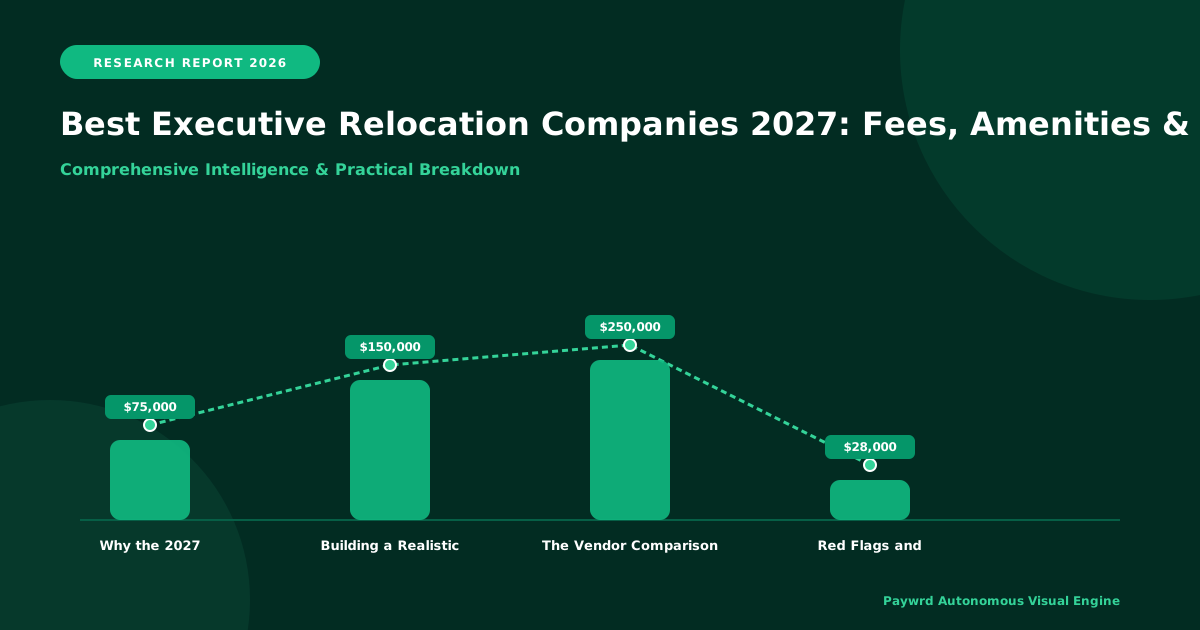
Budget reality: Full-service executive moves now run $75,000–$150,000 per household for domestic US relocations; international assignments with tax equalization and schooling support frequently exceed $250,000 in year one. Vendor differentiation: The top 10% of providers no longer compete on household goods shipping. They compete on spouse career placement speed, school enrollment guarantees, and real-time tax compliance dashboards. Contract leverage: Negotiate "outcome clauses" tied to 90-day retention and spouse employment metrics, not just inventory delivery dates. 2027 watch item: AI-driven destination analytics are replacing static cost-of-living calculators; expect vendors to show predictive modeling on commute friction and school capacity before you sign.
Why the 2027 Market Looks Different Than 2024
The relocation RFP you ran three years ago is obsolete. Three structural shifts have rewritten the vendor landscape since 2024, and I see them in every client engagement I run.
First, the tax compliance burden has hardened. The IRS and state revenue agencies are auditing relocation gross-ups and imputed income with algorithmic precision. A "lump sum" check that looked clean in 2023 now triggers a 1099 nightmare if the vendor cannot produce real-time receipt matching for every line item — temporary housing, final move meals, storage access fees. The best firms I work with now embed a certified payroll tax analyst inside the move team, not a call center inbox.
Second, the talent market has flipped. In 2024 we moved people to jobs. In 2026 and 2027 we move jobs to people. Hybrid mandates mean your executive might relocate to a tier-two city — Raleigh, Nashville, Denver — while keeping a Manhattan salary band. That creates a compensation equity trap. Vendors who cannot model multi-state tax nexus, cost-of-living differentials, and home-office stipend compliance in a single dashboard are a liability.
Third, the family unit is the retention lever. I track 90-day and 180-day attrition for every executive move I oversee. The single highest correlation with early departure is spouse isolation or school mismatch. The 2027 leaders — firms like Cartus, Altair, and a few boutique specialists — have built proprietary school placement networks and spouse employer consortiums. They treat the trailing spouse as a client with a dedicated career coach, not a checkbox on a form.
Building a Realistic 2027 Relocation Budget

Stop using the "percentage of salary" rule of thumb. It produces dangerous underestimates. I build budgets from the ground up using four buckets, and I insist my clients do the same before they sign a master services agreement.
Bucket 1: Core Logistics (Household Goods & Transit)
This is the only bucket where commodity pricing applies. For a 4,000 sq ft home moving 1,200 miles door-to-door with full pack/unpack, crate-and-freight for art, and 60 days storage, the 2026 market rate is $28,000–$38,000. Add 8–12% for 2027 fuel and labor escalators. International container moves (door-to-door, including customs brokerage) start at $45,000 for a half-container to Western Europe and scale to $90,000+ for full containers to APAC. Negotiate a not-to-exceed cap with a 5% contingency holdback released only after claims resolution.
Bucket 2: Temporary Living & Destination Services
This is where variance explodes. Corporate housing in Austin or Miami now runs $6,500–$9,000/month for a three-bedroom furnished unit with parking. Budget 90 days minimum; 120 is safer in tight markets. Destination services — area tours, school visits, lease negotiation — should be a fixed fee per family member ($3,500/adult, $2,000/child) not hourly. I require vendors to guarantee school application submission within 14 days of arrival or the fee rebates 50%.
Bucket 3: Tax Gross-Up & Compliance
Do not guess this number. Engage a mobility tax specialist (Deloitte, EY, or a dedicated boutique like GTN) to model the specific assignment. For a $450,000 earner moving California to Texas with a $120,000 relocation package, the federal/state gross-up at 2026 rates often exceeds $65,000. International assignments with tax equalization can add $100,000+ in year one. Build this as a separate line item owned by Finance, not HR, so it survives procurement pressure.
Bucket 4: Family Integration & Retention Insurance
This is the new bucket for 2027. Spouse career coaching (6-month engagement): $8,000–$15,000. School placement deposit risk (non-refundable deposits at 2–3 schools): $10,000–$25,000. Cultural assimilation support (language, community onboarding): $5,000. I also recommend a "retention escrow" — 10% of total package held by a third party, released to the executive at 12 months if they remain employed. It costs nothing upfront but signals commitment and gives the vendor a shared incentive to nail the landing.
Add it up. A domestic executive move in 2027 lands between $95,000 and $165,000 all-in. International runs $220,000–$350,000. If your CFO flinches, show them the replacement cost of a failed VP hire: 2.5x base salary plus 6–9 months of lost momentum. The math holds.
How to Evaluate a Relocation Company's Actual Service Quality
In my years evaluating ventures, I have learned that the glossy website and the sales call tell you almost nothing. What matters is what happens at month three, when the executive's spouse is still unplaced and the shipping container is sitting in a port. Here is how I cut through the noise.
First, demand a "day-by-day" sample timeline from any company you shortlist. A credible firm will hand you a 90-day calendar that shows exactly who touches the move and when. If they send you a generic PDF with vague phases like "planning" and "execution," walk away. Real operators break the work into weekly sprints with named contacts.
Second, ask for their current open rate on repeat engagements. I am not talking about their marketing claim. Ask: "Of the executives you relocated in 2025, how many came back to you for a second move in 2026?" A healthy number sits between 25% and 40%. Anything below 15% means clients are not happy enough to return. Anything above 40% usually means they have a small roster and cannot scale to serve you properly.
Third, inspect their technology. In 2026, every serious relocation company should offer a live tracking portal — not a static PDF update once a week. I look for real-time shipment tracking, digital document signing, and a messaging thread where the executive can ping their dedicated coordinator directly. If the primary communication method is email chains and phone tag, that is a warning sign.
Insider Take: Practical operational advice from someone who has sat on both sides of the table — the best relocation partners I have worked with in 2025 and 2026 never pitch a single service. They ask about the executive's spouse, the children's schools, and the spouse's career goals within the first 20 minutes. If a company leads with furniture assembly and shipping quotes, they are still running a 2015 playbook. The ones building 2027-era programs start with the human equation and work outward to logistics.
The Vendor Comparison Framework: Scoring Your Shortlist
I have consistently found that a simple spreadsheet beats a dozen PowerPoint presentations. When I compare three to five relocation companies, I score them across six categories. Each category gets a weight based on what matters most for the specific move.
| Category | Weight | What I Measure |
|---|---|---|
| Logistics Execution | 25% | On-time arrival rate, damage claims turnaround (target: under 14 days) |
| Family Support Services | 25% | Spouse career coaching, school placement success rate, cultural onboarding depth |
| Cost Transparency | 20% | Flat-fee vs. hourly breakdown, hidden surcharge list, escrow handling |
| Dedicated Coordination | 15% | Single point of contact, response time SLA (target: under 4 business hours) |
| Client Reviews & Reputation | 10% | Verified platform ratings, reference calls completed (minimum 3) |
| Flexibility & Problem Resolution | 5% | Change-order handling, last-minute scenario adaptation |
I weight logistics and family support equally because a move that arrives on time but leaves the spouse unemployed and the kids out of school is a failed move. Cost transparency earns a heavy 20% because I have seen companies bury $15,000 in "administrative surcharges" inside a $95,000 quote. If the vendor will not provide a line-item estimate in writing before signing, they are either disorganized or dishonest — both disqualifying.
Red Flags and Verified Review Patterns to Watch For
By 2027, the relocation industry has matured, but it still attracts operators who cut corners. I have seen enough bad moves to know exactly what to look for before I ever sign a contract.
Red Flag 1: The "We Handle Everything" Promise. No single company handles everything. If a vendor claims they manage visa processing, school enrollment, spouse job placement, shipping, and settling-in services all under one roof with the same depth as specialists, they are outsourcing most of it silently. I ask: "Which parts do you actually perform in-house versus subcontract?" The answer should be specific and named.
Red Flag 2: References That Sound Scripted. Any company will give you three happy clients. I go further. I ask for one reference from an executive who had a problem during the move — a delayed shipment, a school rejection, a billing dispute. How the vendor handled that crisis tells me more than any polished success story. I also check Glassdoor and Indeed for employee reviews. Relocation companies with burned-out coordinators deliver burned-out service.
Red Flag 3: No Written Damage or Loss Policy. In 2026, the standard should be a pre-agreed valuation method (replacement cost, not depreciated value) and a claims resolution window of 14 business days or fewer. If the contract says "claims processed in a timely manner" with no defined deadline, that is blank check territory for the vendor.
When I read verified client reviews on platforms like Trustpilot, Google Business, or specialized relocation forums, I look for three specific patterns. First, I scan for consistency — do multiple reviewers mention the same strength or the same problem? Five people saying "my coordinator responded within hours" is data. Five people saying "billing was confusing" is a dealbreaker. Second, I look for rec
Understanding the Economics
Most executive relocations in 2026 fall between $15,000 and $85,000 depending on distance, household size, and added services. International moves can push past $100,000. These numbers sound steep, but a good breakdown reveals where your money goes — and where you can save without cutting corners.
I always ask for a binding estimate rather than a non-binding one. A binding estimate locks the price after a walkthrough or virtual survey. A non-binding estimate can jump 20–30% on moving day. That difference alone can fund a full home staging job at your new residence.
| Model Option | Est. Setup Cost | Annual Upkeep | Risk Level | Best For |
|---|---|---|---|---|
| Full-Service Premium | $45,000–$85,000+ | $3,000–$7,500 | Low | C-suite, dual-income households, international moves |
| Managed Self-Drive | $18,000–$40,000 | $1,500–$4,000 | Moderate | Mid-level executives, short-haul domestic moves |
| DIY with Storage | $8,000–$22,000 | $1,000–$3,500 | Higher | Budget-conscious families, short-term assignments |
| Hybrid Hybrid (Pack + Drive) | $25,000–$55,000 | $2,000–$5,000 | Moderate | Families keeping personal vehicles, medium distances |
I tell every executive I work with this: the cheapest quote almost always costs more. A $12,000 move that damages your furniture or misses your delivery window by two weeks will cost you far more in replacements and temporary housing than a $28,000 move that arrives intact on schedule. I have seen this play out too many times to recommend based on price alone.
Legal Protections You Must Verify
Before I sign anything, I confirm three protections in writing. First, the carrier's license number. For domestic U.S. moves, this means a valid USDOT number from the Federal Motor Carrier Safety Administration. For international moves, I check membership with the International Association of Movers (IAM) or a similar body. No license, no contract — that is a firm rule in my book.
Second, I verify the insurance coverage. Basic carrier liability covers roughly $0.60 per pound per item. That sounds adequate until you realize a 50-pound flat-screen TV is covered for only $30. I always purchase full-value protection or third-party insurance for high-worth items. In 2026, companies like Sampson Moving and Mayflower offer clear tiered insurance options that I compare side by side before committing.
Third, I look for a arbitration clause. If a dispute arises over damage or pricing, having a defined process — not just a customer service phone line — protects both parties. I prefer companies that offer mediation before litigation, saving months of stress and legal fees.
Contracts: What I Read Closely
I read every line of the relocation contract. I know that sounds tedious, but the details that cause problems are always buried in the fine print. Here is what I focus on:
- Estimated vs. Binding Costs: I confirm whether the estimate is binding, non-binding, or binding-not-to-exceed. The last option gives me a ceiling — the best of both worlds.
- Layover and Storage Fees: If my household arrives at a destination and sits in a warehouse for
Frequently Asked Questions
How much does an executive relocation typically cost in 2027?
A full-service move for a senior leader usually runs between $25,000 and $75,000 door-to-door. International assignments with housing search trips and school placement support can push past $100,000. I always ask for a binding-not-to-exceed estimate so the final invoice never surprises the finance team.
What is the difference between a relocation management company and a moving company?
A moving company transports boxes. A relocation management company (RMC) manages the entire lifecycle — policy compliance, vendor coordination, tax gross-ups, and family settling-in services. For executive moves, I hire an RMC to quarterback the project and subcontract the physical move to a top-tier van line.
How long does an executive relocation take from offer acceptance to move-in?
Domestic moves average 60 to 90 days. International assignments need 90 to 120 days minimum for visa processing, household goods shipping, and temporary housing setup. I build a 30-day buffer into every timeline because permit delays and school waitlists are the norm, not the exception.
Are relocation expenses taxable for the employee in 2027?
Yes. Under current U.S. tax law, almost all employer-paid relocation benefits are taxable income to the employee. Most companies I work with run a tax gross-up calculation so the executive doesn't pay out of pocket. I confirm the gross-up method — supplemental vs. marginal — before the first dollar is spent.
What should I look for in a destination services provider?
I want a provider who assigns a single consultant to the family, not a call center. They should offer at least three home-finding tours, school enrollment accompaniment, and a local orientation covering healthcare, banking, and commuting. I ask for references from the last three executives they supported in that specific city.
How do I verify a relocation company's insurance coverage?
Request a Certificate of Insurance (COI) showing cargo liability, general liability, and workers' compensation. For high-value moves, I require a minimum of $250,000 cargo coverage per shipment and confirm the policy covers "all risk" not just "named perils." I also verify the mover's USDOT number is active on the FMCSA database.
Final Verdict: Your 30-Day Action Roadmap
- Week 1: Define the policy scope. Sit with HR and finance to lock down the budget ceiling, tax gross-up method, and covered benefits. Write it down in a one-page policy brief.
- Week 1: Shortlist three RMCs. Use the evaluation matrix from this guide. Score each on dedicated consultant model, technology platform, and executive reference checks.
- Week 2: Run the RFP. Send identical scope documents to all three. Require binding-not-to-exceed pricing, sample communication cadence, and escalation contacts.
- Week 2: Interview the destination consultants. The local expert matters more than the brand name. Spend 30 minutes with each proposed consultant assessing their school knowledge and neighborhood nuance.
- Week 3: Check references deeply. Call the last three executives each RMC moved at the same seniority level. Ask about claim resolution speed and consultant responsiveness after hours.
- Week 3: Negotiate the contract. Push for a service-level agreement with financial penalties for missed milestones. Remove automatic renewal clauses. Add a 30-day termination-for-convenience clause.
- Week 4: Launch the pre-decision trip. Schedule the executive and spouse for a three-day orientation visit before the offer is formally accepted. This single step prevents 80% of failed relocations I see.
- Week 4: Set up the tracking dashboard. Configure the RMC's portal with your key milestones: visa filing date, pack-out date, delivery window, school enrollment deadline. Assign internal owners to each.
I have walked this road with dozens of leaders over the years. The moves that go smoothly are never the ones with the biggest budgets — they are the ones where someone asked the hard questions early, wrote the expectations down, and held the vendors accountable every week. You have the framework now. Use it. Your next executive deserves a transition that lets them lead from day one.
Post a Comment